Category Archives: The Barley
Got Gas? An Explanation of Beer Can Widgets
Getting a beer from the tap is one of the great pleasures of beer enjoyment. But what can you do if you are at home and you don’t have your own tap from which to pour? An invention called a Widget has you covered!
According to Wikipedia:
A widget is a device placed in a container of beer to manage the characteristics of the beer’s head.
The head is the bubbly portion above the liquid when the beer is poured. The head is a big reason for the increase in beer enjoyment when obtained from a tap rather than a bottle.
What exactly is a Widget?

That’s not a ping pong ball… it’s a Widget! (Photo via Wired.com)
Invented by Guinness, the widget allows for pub type enjoyment of beer in your own home. It is a small plastic ball filled with nitrogen gas. It also has a small hole in it. Placed into the beer can, the widget floats patiently while waiting for you to crack the beer open.
When a can with a widget is opened, the nitrogen escapes the ball and infuses the beer with tiny bubbles that become nucleation points. This allows the CO2 to separate from the beer and build the beautiful and creamy head. There is a beautiful cascading effect where the bubbles near the edge of the glass actually move downward. Watching the fine bubbles cascade and form a smooth delineation between beer and head is one of the most enjoyable things about pouring beer.
How should I pour it?
When I enjoy a widget beer I usually crack it open and pour it straight down into the middle of the glass. I have never had a widget beer overflow on me. But apparently I am doing it wrong.
Let’s learn how to pour a widget beer from the Guinness Master Brewer, Fergal Murray.
UPDATE: This video has been made private since I posted this article.
Did you notice the cascading bubbles? So beautiful!
What beers have widgets?
UPDATE June 4th, 2015: I originally had an image here but I had mistakenly only linked to the original blog post from where it originated rather than provide textual credit in the caption. I have received permission to use the image and I strongly recommend you read the “Beer With Widgets“ article from Chris Forman at Burgers And Beer Food Reviews. He does a great job (much better than I did) at explaining the widget as well as providing reviews of the beers in the image. Chris, please accept my apology. Here is the photo that Chris captured:
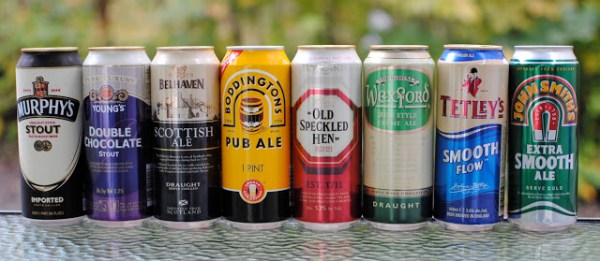
Photo Credit: Chris Forman of burgersandbrewsfoodreviews.blogspot.com
Notice anything about those beers? All of the beers in Chris’ image are English, Irish, or Scottish. (Note: He used a separate image for Guinness, which otherwise would have joined these beers)
I have had all except the Tetley’s and the John Smith’s as shown above. The most recent was Old Speckled Hen. Of those shown above I would saw my favorite is the Boddington’s Pub Ale.
There are breweries here in the US that are starting to utilize nitrogen in their beers. One of those is Left Hand Brewing which makes a Nitro Milk Stout. These do not use a nitrogen widget. Rather, they are already infused with the nitrogen, which gets busy once the beer is opened.
The foamy head and smooth characteristic of nitro beers is one that produces a love/hate relationship with many people. I happen to love a smooth nitro beer and I am looking forward to more nitro beers being available. Do you have any preference about nitro beers?

Monday Brews: 1-20-14
Welcome to another week of awesomeness on Boards & Barley! Thanks for visiting.
This week I’m planning on posting an article about Nitro/Widget cans for beers, an article about Design Space in game design, and a Design Me article! It should be a good week for Boards & Barley. Note: these articles might be circumvented if others things come up.
But since it’s Monday, lets take a look at the Boards & Barley I enjoyed last week.
The Barley:
New Glarus Cabin Fever: This has become a winter staple around these parts. I could drink these during any board game.
Atwater Vanilla Java Porter: This is a splendid java porter with an excellent amount of vanilla. I recommend drinking this while playing VivaJava.
Capital Winter Skal: This is a decent beer from a local brewery. It tastes and feels a little like Winter, which is probably a good things since it is a seasonal winter beer.
Newton’s Oatmeal Stout: Finally making a dent in my supply of this homebrew. I think it is getting a little better with age now that it is about 5 or 6 months old.
Negra Modelo: I enjoyed this while eating chimichangas at a local Mexican restaurant. It was actually pretty good.
Old Speckled Hen: This was enjoyed while watching the latest episode of Sherlock with some friends. It was a delicious and smooth beer that I know I will enjoy again in the future.
Angry Orchard Appleginger: This was an interesting offering of apple and ginger. It tasted more like soda with it’s fizzy-ness. I’m not sure I would drink it again.
The Boards:
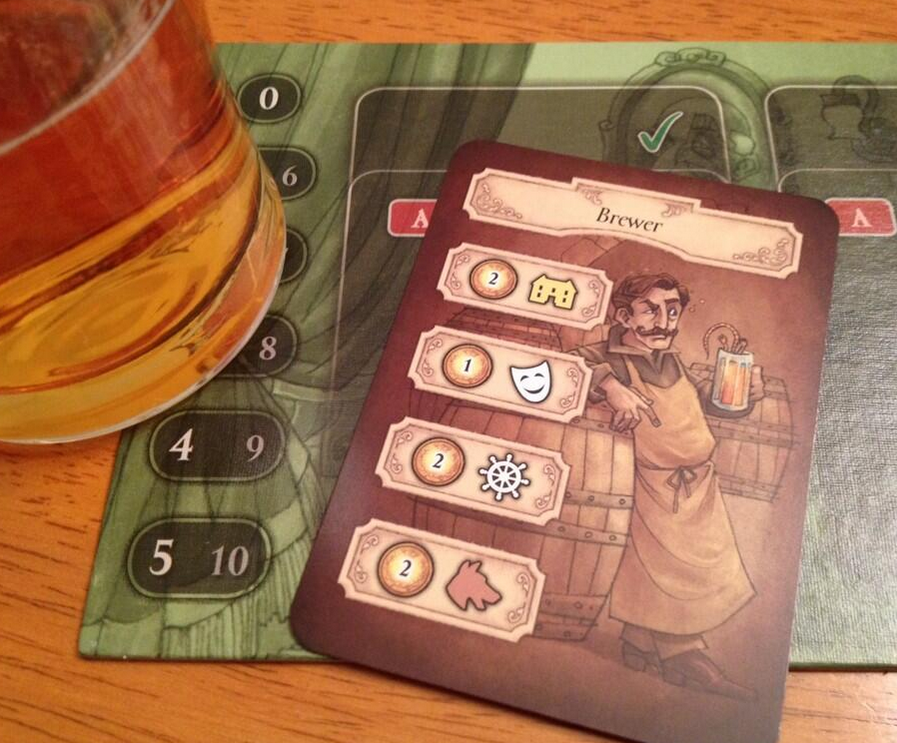
As a Brewer I didn’t want to get sacked!
Council of Verona x2: I bought this from the friendly Patrick Nickell of Crash Games at BGG.con and I am sad that it took me so long to finally play it. Sorry Patrick. However, this game is a really awesome, simple design that has a lot of subtle strategy. There are nice decisions to make in the game despite it only lasting three rounds. I love when a small package supplies a lot of gameplay experience. CoV does just that!
Last Will with Getting Sacked expansion: I love Last Will! I think it is such a clever design and it seems very well balanced. Therefore I was very excited to try it with the Getting Sacked expansion. It was pretty sweet. By having a job and needing to get sacked it steered the strategy a little bit. Also, having the nuptials cards made it desirable to hold onto them so you could play a bunch at the same time. I thought the expansion added enough to make the game refreshing again, yet without really changing the feel of the game.
Kingdom Builder: I played another game of Kingdom Builder and pulled off a nice win thanks to getting the right terrain card on my last turn. This game is fun and frustrating at the same time. I’m hoping Donald X. and Queen Games have another expansion in store!
Designer’s Corner:
I didn’t really do much design in the past week. I was slightly jealous of all my cohorts who trekked over to Delaware for Unpub 4. I hope they had a most excellent time.
I did work a little on Brooklyn Bridge and things are starting to come together. My goal is to still get this prototyped and playable for testing at Protospiel-Milwaukee in March. I hope to see you all there!
***
So those are the Boards & Barley I enjoyed last week. What did you enjoy?
Brewology 101: Beer Style Guide

IPA or Wee Heavy? What’s your Style of choice?
Beer can be really awesome. It is fun to brew my own beer. And it is fun to try new beers. Remember though, that alcohol should be enjoyed in moderation, so drink responsibly.
Today I want to give you a course in standard beer styles. This is by no means exhaustive, but is meant to acquaint you with some styles you may not be familiar with.
I struggled with how to sort them. You could sort by color, bitterness, alcohol percent, etc. I’ll just separate ales and lagers and roll with that.
You’ve gotta see this poster!
There are a lot of awesome beer style posters out there (like this and this and this and this). For one of the most amazing beer posters you’ll ever see, click this link or the image on the right. You could spend all day looking at that and never have to finish this article. That poster calls out 13 standard types of ales and 5 standard types of lagers. If you need a refresher on the differences between ales and lagers, check out my previous Brewology article.
For a nice listing of the American Homebrewers Association or the Beer Judging Certification Program styles, check out this link. Let’s start with the bottom fermenters! We’ll break it down into main and subcategories based on the listings from BeerAdvocate.com.
Lager Styles
All descriptions are from BeerAdvocate.com. I’m doing my best Labeoufing in plagiarizing compiling all this info for you.
American Lagers:
- American Adjunct Lager: Light bodied, pale, fizzy lagers made popular by the large macro-breweries (large breweries) of America after prohibition. Low bitterness, thin malts, and moderate alcohol. Focus is less on flavor and more on mass-production and consumption, cutting flavor and sometimes costs with adjunct cereal grains, like rice and corn. AVOID THESE!
- California Common / Steam Beer: The California Common, or Steam Beer, is a unique 100% American style lager. It’s usually brewed with a special strain of lager yeast that works better at warmer temperatures. This method dates back to the late 1800’s in California when refrigeration was a great luxury. The brewers back then had to improvise to cool the beer down, so shallow fermenters were used. So in a way the lager yeast was trained to ferment quicker at warmer temperatures. Today’s examples are light amber to tawny in color, medium bodied with a malty character. Mildly fruity with an assertive hop bitterness. Anchor Brewing Co. trademarked the term “Steam Beer” and as such all other beers must be legally referred to as “California Common.”
- Light Lager: The Light Lager is generally a lighter version of a breweries premium lager, some are lower in alcohol but all are lower in calories and carbohydrates compared to other beers. Typically a high amount of cereal adjuncts like rice or corn are used to help lighten the beer as much as possible. Very low in malt flavor with a light and dry body. The hop character is low and should only balance with no signs of flavor or aroma. European versions are about half the alcohol (2.5-3.5% abv) as their regular beer yet show more flavor (some use 100% malt) then the American counterparts. For the most part this style has the least amount of flavor than any other style of beer. ALSO AVOID THESE!
Czech Lagers:
- Czech Pilsener: The birth of Pilsner beer can be traced back to its namesake, the ancient city of Plzen (or Pilsen) which is situated in the western half of the Czech Republic in what was once Czechoslovakia and previously part of the of Bohemian Kingdom. Pilsner beer was first brewed back in the 1840’s when the citizens, brewers and maltsters of Plzen formed a brewer’s guild and called it the People’s Brewery of Pilsen.The Czech Pilsner, or sometimes known as the Bohemian Pilsner, is light straw to golden color and crystal clear. Hops are very prevalent usually with a spicy bitterness and or a spicy floral flavor and aroma, notably one of the defining characteristics of the Saaz hop. Smooth and crisp with a clean malty palate, many are grassy. Some of the originals will show some archaic yeast characteristics similar to very mild buttery or fusel (rose like alcohol) flavors and aromas.
European Lagers:
- Pale Lager: Similar to the Munich Helles story, many European countries reacted to the popularity of early pale lagers by brewing their own. Hop flavor is significant and of noble varieties, bitterness is moderate, and both are backed by a solid malt body and sweetish notes from an all-malt base.
- Strong Lager: Many breweries around the world brew a stronger version of their regular lager. For the US there is the Ice Beer & Malt Liquor, both have a high amount of rice or corn to lighten the flavor. Many European & Asian breweries have a strong lager similar to the Malt Liquor though there is more malt use or it is all malt. Many breweries rush the fermentation or the brew will be too light and signs of higher alcohols will be noticed in the aroma and flavor.
German Lagers:
- Bock: The origins of Bock beer are quite uncharted. Back in medieval days German monasteries would brew a strong beer for sustenance during their Lenten fasts. Some believe the name Bock came from the shortening of Einbeck thus “beck” to “bock.” Others believe it is more of a pagan or old world influence that the beer was only to be brewed during the sign of the Capricorn goat, hence the goat being associated with Bock beers. Basically, this beer was a symbol of better times to come and moving away from winter. As for the beer itself in modern day, it is a bottom fermenting lager that generally takes extra months of lagering (cold storage) to smooth out such a strong brew. Bock beer in general is stronger than your typical lager, more of a robust malt character with a dark amber to brown hue. Hop bitterness can be assertive enough to balance though must not get in the way of the malt flavor, most are only lightly hopped.
- Doppelbock: Bocks–you know, those beers with goats on the label–are relatively strong German lagers. Doppelbocks–as the name might suggest–are typically even stronger and contain enough malty goodness that theyve been considered a meal in a glass for centuries. Generally they have a very full-bodied flavor and are darker than their little Bock brothers and sisters and a higher level of alcohol too. They range in color from dark amber to nearly black, and dark versions often have slight chocolate or roasted characters.
- Eisbock: Eisbocks are created by freezing off a portion of the water, and removing it from the beer. This form of concentration, of sorts, increases the beer’s body, flavor, and alcohol content. They can range from near black to as light as tawny red. Hop bitterness and flavor are mostly cast aside with a big alcohol presence replacing it, which can range from sweet to spicy, and fruity to often times fusel. Look for a heavy or almost syrupy body with tons of malty flavor.
- Maibock / Helles Bock: The Maibock style of beer tends to be lighter in color than other Bock beers and often has a significant hop character with a noticeable alcohol around the same as a traditional Bock. Maibocks are customarily served in the spring and are oftentimes interrelated with spring festivals and celebrations more often in the month of May.
- Märzen / Oktoberfest: Before refrigeration, it was nearly impossible to brew beer in the summer due to the hot weather and bacterial infections. Brewing ended with the coming of spring, and began again in the fall. Most were brewed in March (Märzen). These brews were kept in cold storage over the spring and summer months, or brewed at a higher gravity, so theyd keep. Märzenbier is full-bodied, rich, toasty, typically dark copper in color with a medium to high alcohol content. The common Munich Oktoberfest beer served at Wies’n (the location at which Munich celebrates its Oktoberfest) contains roughly 5.0-6.0% alcohol by volume, is dark/copper in color, has a mild hop profile and is typically labeled as a Bavarian Märzenbier in style.
- Rauchbier: The Rauchbier style is an old German beer style, its origins go back to the 1500’s and to the district of Franconia and the town of Bamberg. It’s typically of dark colour and has similarities of the Oktoberfestbier. Green malts are literally dried over an open fire of beech wood, imparting a unique smokiness (“rauch” is German for smoke), the usage of which produces beers of an acquired taste. Imagine a smokiness so robust, so assertive, that it tastes of spiced, smoked meat.
- Schwarzbier: Schwarzbier (“shvahrts-beer”), is simply German for black beer. It doesn’t mean that its necessarily heavy or light in body, although they tend to lean towards light. Unlike other dark beers, like porters or stouts, they are not overly bitter with burnt and roasted malt characteristics that the others tend to depend on. Instead, hops are used for a good portion of the bitterness. Very refreshing and soul lifting beers, they also make a great alternative for the Winter. Especially when you are looking for a lighter beer, but one with depth of colour and taste.
- Vienna Lager: Named after the city in which it orginated, a traditional Vienna lager is brewed using a three step decoction boiling process. Munich, Pilsner, Vienna toasted and dextrin malts are used, as well wheat in some cases. Subtle hops, crisp, with residual sweetness. Although German in origin and rare these days, some classic examples come from Mexico, such as: Dos Equis and Negra Modelo. A result of late 19th century immigrant brewers from Austria.
Japanese Lagers:
- Happoshu: Japanese beer companies produce what’s called “Happoshu,” which is sparkling low malt beverage. Since the tax for Happoshu is much less than the tax for beer, happoshu is cheaper than beer. For that reason, Happoshu has become very popular in Japan. Happoshu classification occurs when an ingredient other than malt, hops, rice, corn, kaoliang, potato, starch, or sugar is used, or if the malt ratio is less than 67%.
- Rice Lager: Similar to Macro / Adjunct Lagers, wherein the beer’s grist bill is cut by using large portions of rice, but not enough to be classified as Happoshu. Pale yellow in color, soft hop nose, and expect a rounded, firm malty character, moderate bitterness, and a trademark dry finish.
And now let’s cover the top fermenters!
Ale Styles
All descriptions are from BeerAdvocate.com. More Labeoufing!
American Ales:
- Amber Ale / Red Ale: Primarily a catch all for any beer less than a Dark Ale in color, ranging from amber (duh) to deep red hues. This style of beer tends to focus on the malts, but hop character can range from low to high. Expect a balanced beer, with toasted malt characters and a light fruitiness in most examples. The range can run from a basic ale, to American brewers who brew faux-Oktoberfest style beers that are actually ales instead of lagers.
- Blonde Ale: More or less a creation from the craft-brewery movement, and also reminiscent of the German style Kölsch. Pale straw to deep gold for color. Usually an all malt brew, well attenuated with a lightly malty palate. Most have a subdued fruitiness. Hop character is of the noble variety, or similar, leaving a light to medium bitterness. A balanced beer, light bodied and sometimes lager like.
- Brown Ale: Spawned from the English Brown Ale, the American version can simply use American ingredients. Many other versions may have additions of coffee or nuts. This style also encompasses “Dark Ales”. The bitterness and hop flavor has a wide range and the alcohol is not limited to the average either.
- India Pale Ale (American Version): The American IPA is a different soul from the reincarnated IPA style. More flavorful than the withering English IPA, color can range from very pale golden to reddish amber. Hops are typically American with a big herbal and / or citric character, bitterness is high as well. Moderate to medium bodied with a balancing malt backbone.
- Porter: Inspired from the now wavering English Porter, the American Porter is the ingenuous creation from that. Thankfully with lots of innovation and originality American brewers have taken this style to a new level. Whether it is highly hopping the brew, using smoked malts, or adding coffee or chocolate to complement the burnt flavor associated with this style. Some are even barrel aged in Bourbon or whiskey barrels. The hop bitterness range is quite wide but most are balanced. Many are just easy drinking session porters as well.
- Stout: Inspired from English & Irish Stouts, the American Stout is the ingenuous creation from that. Thankfully with lots of innovation and originality American brewers have taken this style to a new level. Whether it is highly hopping the brew or adding coffee or chocolate to complement the roasted flavors associated with this style. Some are even barrel aged in Bourbon or whiskey barrels. The hop bitterness range is quite wide but most are balanced. Many are just easy drinking session stouts as well.
- Cream Ale: Cream Ales, spawned from the American light lager style, are brewed as an ale though are sometimes finished with a lager yeast or lager beer mixed in. Adjuncts such as corn or rice are used to lighten the body. It is no uncommon for smaller craft brewers to brew all malt Cream Ales. Pale straw to pale gold color. Low hop bittering and some hop aroma though some micros have given the style more of a hop character. Well carbonated and well attenuated.
Belgian / French Ales:
- Bière de Garde: The Biere de Garde is golden to deep copper or light brown in color. They are moderate to medium in body. This style of beer is characterized by a toasted malt aroma, slight malt sweetness in flavor, and medium hop bitterness. Noble-type hop aromas and flavors should be low to medium. Fruity esters can be light to medium in intensity. Flavor of alcohol is evident. Earthy, cellar-like, musty aromas and flavors are okay. Diacetyl should not be perceived but chill haze is okay. Often bottle conditioned with some yeast character.
- Dubbel: The Belgian Dubbel is a rich malty beer with some spicy / phenolic and mild alcoholic characteristics. Not as much fruitiness as the Belgian Strong Dark Ale but some dark fruit aromas and flavors may be present. Mild hop bitterness with no lingering hop flavors. It may show traits of a steely caramel flavor from the use of crystal malt or dark candy sugar. Look for a medium to full body with an expressive carbonation. Traditionally a Trappist Ale, many brew similar “Abbey Dubbels” to try and emulate the originals (Trappist Westvleteren 8, Westmalle Trappist Dubbel & Chimay Première).
- Tripel: The name “Tripel” actually stems from part of the brewing process, in which brewers use up to three times the amount of malt than a standard Trappist “Simple.” Traditionally, Tripels are bright yellow to gold in color, which is a shade or two darker than the average Pilsener. Head should be big, dense and creamy. Aroma and flavor runs along complex, spicy phenolic, powdery yeast, fruity/estery with a sweet finish. Sweetness comes from both the pale malts and the higher alcohol. Bitterness is up there for a beer with such a light body for its strength, but at times is barely perceived amongst the even balance of malts and hops. The lighter body comes from the use of Belgian candy sugar (up to 25% sucrose), which not only lightens the body, but also adds complex alcoholic aromas and flavors. Small amounts of spices are sometimes added as well. Tripels are actually notoriously alcoholic, yet the best crafted ones hide this character quite evil-like and deceivingly, making them sipping beers.
- Quadrupel: Inspired by the Trappist brewers of Belgium, a Quadrupel is a Belgian style ale of great strength with bolder flavor compared to its Dubbel and Tripel sister styles. Typically a dark creation that ranges within the deep red, brown and garnet hues. Full bodied with a rich malty palate. Phenols are usually at a moderate level. Sweet with a low bitterness yet a well perceived alcohol.
- Saison / Farmhouse: Saisons are sturdy farmhouse ale that was traditionally brewed in the winter, to be consumed throughout the summer months. Not so long ago it was close to being an endangered style, but over recent years there’s been a massive revival; especially in the US. This is a very complex style; many are very fruity in the aroma and flavor. Look for earthy yeast tones, mild to moderate tartness. Lots of spice and with a medium bitterness. They tend to be semi-dry with many only having touch of sweetness.
- Witbier: A Belgian Style ale that’s very pale and cloudy in appearance due to it being unfiltered and the high level of wheat, and sometimes oats, that’s used in the mash. Always spiced, generally with coriander, orange peel and other oddball spices or herbs in the back ground. The crispness and slight twang comes from the wheat and the lively level of carbonation. This is one style that many brewers in the US have taken a liking to and have done a very good job of staying to style. Sometimes served with a lemon, but if you truly want to enjoy the untainted subtleties of this style you’ll ask for yours without one. Often referred to as “white beers” (witbieren) due to the cloudiness / yeast in suspension.
- Lambic: In the case of Fruit Lambics, whole fruits are traditionally added after spontaneous fermentation has started. Kriek (cherries), Frambroise (raspberries), Pêche (peach) and Cassis (black currant) are common fruits, all producing subtle to intense fruit characters respectively. Once the fruit is added, the beer is subjected to additional maturation before bottling. Malt and hop characters are generally low to allow the fruit to consume the palate. Alcohol content tends to be low.
English Ales:
- Baltic Porter: Porters of the late 1700’s were quite strong compared to todays standards, easily surpassing 7% alcohol by volume. Some brewers made a stronger, more robust version, to be shipped across the North Sea, dubbed a Baltic Porter. In general, the styles dark brown color covered up cloudiness and the smoky/roasted brown malts and bitter tastes masked brewing imperfections. The addition of stale ale also lent a pleasant acidic flavor to the style, which made it quite popular. These issues were quite important given that most breweries were getting away from pub brewing and opening up breweries that could ship beer across the world.
- English Bitter: The Bitter style came from brewers who wanted to differentiate these ales from other mild brews, enter pale malts and more hops. Most are gold to copper in colour and are light bodied. Low carbonation. Alcohol should be low and not perceived. Hop bitterness is moderate to assertive. Most have a fruitiness in the aroma and flavor, diacetyl can also be present. These are traditionally served cask conditioned, but many breweries have bottled versions
- India Pale Ale (English Version): First brewed in England and exported for the British troops in India during the late 1700s. To withstand the voyage, IPA’s were basically tweaked Pale Ales that were, in comparison, much more malty, boasted a higher alcohol content and were well-hopped, as hops are a natural preservative. Historians believe that an IPA was then watered down for the troops, while officers and the elite would savor the beer at full strength. The English IPA has a lower alcohol due to taxation over the decades. The leaner the brew the less amount of malt there is and less need for a strong hop presence which would easily put the brew out of balance. Some brewers have tried to recreate the original IPA with strengths close to 8-9% abv.
- Pale Ale: The English Pale Ale can be traced back to the city of Burton-upon-Trent, a city with an abundance of rich hard water. This hard water helps with the clarity as well as enhancing the hop bitterness. This ale can be from golden to reddish amber in color with generally a good head retention. A mix of fruity, hoppy, earthy, buttery and malty aromas and flavors can be found. Typically all ingredients are English.
- Porter: Porter is said to have been popular with transportation workers of Central London, hence the name. Most traditional British brewing documentation from the 1700s state that Porter was a blend of three different styles: an old ale (stale or soured), a new ale (brown or pale ale) and a weak one (mild ale), with various combinations of blending and staleness. The end result was also commonly known as “Entire Butt” or “Three Threads” and had a pleasing taste of neither new nor old. It was the first truly engineered beer, catering to the public’s taste, playing a critical role in quenching the thirst of the UKs Industrial Revolution and lending an arm in building the mega-breweries of today. Porter saw a comeback during the homebrewing and micro-brewery revolution of the late 1970s and early 80s, in the US. Modern-day Porters are typically brewed using a pale malt base with the addition of black malt, crystal, chocolate or smoked brown malt. The addition of roasted malt is uncommon, but used occasionally. Some brewers will also age their beers after inoculation with live bacteria to create an authentic taste. Hop bitterness is moderate on the whole and color ranges from brown to black. Overall they remain very complex and interesting beers.
- Stout: As mysterious as they look, stouts are typically dark brown to pitch black in color. A common profile amongst Stouts, but not in all cases, is the use of roasted barley (unmalted barley that is kilned to the point of being charred) which lends a dry character to the beer as well as a huge roasted flavor that can range from burnt to coffee to chocolate. A different balance of hops is up to the brewers preference, but the roasted character must be there.
- Milk / Sweet Stout: Milk / Sweet Stouts are basically stouts that have a larger amount of residual dextrins and unfermented sugars that give the brew more body and a sweetness that counters the roasted character. Milk Stouts are very similar to Sweet Stouts, but brewers add unfermentable sugars, usually lactose, to the brew kettle to add body and some sweetness.
- Oatmeal Stout: These are generally medium to full bodied stouts that have an unreal smoothness to them from the addition of oats to the mash. The oats not only add a lot of smoothness to the mouth feel but give a touch of sweetness that is unlike any other type of stout. Both levels of roasted flavor and hop character will vary.
- Old Ale: Old Ales, also referred to in the past as “Stock” Ales, are low attenuated beers with high levels of dextrins, creating a full malt body with plenty of character. Old Ales of a hundred plus years ago were often transfered into vats to mature, hence the name. Rich dark amber in color to a very dark brown; near black. Tamed aromatics. Although bittering levels can greatly vary, expect common fruity, vinous, intense malts and sharp alcohol characteristics. The often racy but mellow attitude of the beer may also include acidic notes, raisins and black currants. Vintage varieties may have a low level of oxidation. Stronger versions may have similarities to a port wine. Brewers may also inoculate a portion of the batch with Brettanomyces lambicus and age for an extended period of time to achieve an old-school acidic character.
- Russian Imperial Stout: Inspired by brewers back in the 1800’s to win over the Russian Czar, this is the king of stouts, boasting high alcohol by volumes and plenty of malt character. Low to moderate levels of carbonation with huge roasted, chocolate and burnt malt flavours. Often dry. Suggestions of dark fruit and flavors of higher alcohols are quite evident. Hop character can vary from none, to balanced to aggressive.
- Winter Warmer: These malty sweet offerings tend to be a favorite winter seasonal. Big malt presence, both in flavor and body. The color ranges from brownish reds to nearly pitch black. Hop bitterness is generally low, leveled and balanced, but hop character can be pronounced. Alcohol warmth is not uncommon. Many English versions contain no spices, though some brewers of spiced winter seasonal ales will slap “Winter Warmer” on the label. Those that are spiced, tend to follow the “wassail” tradition of blending robust ales with mixed spices, before hops became the chief “spice” in beer. American varieties many have a larger presences of hops both in bitterness and flavor.
Finnish Ales:
- Sahti: Said to be one of the only primitive beers to survive in Western Europe, Sahti is a farmhouse ale with roots in Finland. First brewed by peasants in the 1500s, mashing (steeping of grains) went down in wooden barrels, and then that mash would be scooped into a hand-carved wooden trough (a kuurna) with a bed of juniper twigs that acted as a filter. The bung at the bottom of the kuurna would be pulled to allow the sweet wort (liquid infusion from the mash) to pass through the twig filter, followed by wort recirculation and a hot water sparge (rinsing of the grains), all of which created a juniper infusion of sorts.Sahti is also referred to as being turbid, because the wort isn’t boiled after lautering (separation of spent grain and liquid), leaving loads of proteins behind, thus providing tremendous body. A low-flocculating Finnish bakers yeast creates a cloudy unfiltered beer, with an abundance of sediment. Traditional Sahti is not typically hopped, so the task of balancing is left up to the juniper twigs, which impart an unusual resiny character and also act as a preservative. Some have compared Sahtis to German Hefeweizens, though we find them to be more akin to the Lambics of Belgium due to the exposure to wild yeast and bacteria, and its signature tartness.
German Ales:
- Berliner Weissbier: Berliner Weisse is a top-fermented, bottle conditioned wheat beer made with both traditional warm-fermenting yeasts and lactobacillus culture. They have a rapidly vanishing head and a clear, pale golden straw-coloured appearance. The taste is refreshing, tart, sour and acidic, with a lemony-citric fruit sharpness and almost no hop bitterness. Served in wide bulbous stemmed glasses, tourists in Berlin will often order on as a “Berliner Weisse mit Schuss: Himbeere” or “Berliner Weisse mit Schuss: Waldmeister”. These are syrups that are added to make the sourness more palatable. Himbeere is raspberry (red) and Waldmeister is woodruff (green).
- Hefeweizen: A south German style of wheat beer (weissbier) made with a typical ratio of 50:50, or even higher, wheat. A yeast that produces a unique phenolic flavors of banana and cloves with an often dry and tart edge, some spiciness, bubblegum or notes of apples. Little hop bitterness, and a moderate level of alcohol. The “Hefe” prefix means “with yeast”, hence the beers unfiltered and cloudy appearance. Poured into a traditional Weizen glass, the Hefeweizen can be one sexy looking beer. Often served with a lemon wedge (popularized by Americans), to either cut the wheat or yeast edge, which many either find to be a flavorful snap … or an insult and something that damages the beer’s taste and head retention.
- Dunkelweizen: Similar to a Hefeweizen, these southern Germany wheat beers are brewed as darker versions (Dunkel means “dark”) with deliciously complex malts and a low balancing bitterness. Most are brown and murky (from the yeast). The usual clove and fruity (banana) characters will be present, some may even taste like banana bread.
- Kölsch: First only brewed in Köln, Germany, now many American brewpubs and a hand full of breweries have created their own version of this obscure style. Light to medium in body with a very pale color, hop bitterness is medium to slightly assertive. A somewhat vinous (grape-y from malts) and dry flavor make up the rest.
- Weizenbock: A more powerful Dunkel Weizen (of “bock strength”), with a pronounced estery alcohol character, perhaps some spiciness from this, and bolder and more complex malt characters of dark fruits.
Russian Ales:
- Kvass: Kvass is Russian for “leaven” and is a 16th century beer-like beverage made with grains – wheat, rye, barley, etc – or dark rye bread, and often has additions of sugars, birch sap, berries, fruits; the process is akin to ancient beer brewing. It’s basically a fermentation of what’s around with a simple bakers yeast. It’s low in alcohol and often flavored with herbs or fruits to knock the bitter edge out.
Irish Ales:
- Irish Dry Stout: One of the most common stouts, Dry Irish Stout tend to have light-ish bodies to keep them on the highly drinkable side. They’re usually a lower carbonation brew and served on a nitro system for that creamy, masking effect. Bitterness comes from both roasted barley and a generous dose of hops, though the roasted character will be more noticeable. Examples of the style are, of course, the big three, Murphy’s, Beamish, and Guinness, however there are many American brewed Dry Stouts that are comparable, if not better.
- Irish Red Ale: A bit sweet, with a lightly hopped tea-like flavor, and an even dextrinous body, Irish Red Ales are easy to please. Look for well-rounded and balanced flavors, and a pleasant toasted malt character in many examples. A drying finish is common.
Scottish Ales:
- Scotch Ale / Wee Heavy: Scotch Ales are strong ales, also known as “Wee Heavy.” In the 19th century Scotland, they’d also be known as 160/-, a nomenclature based on the now obsolete shilling currency. Scotch Ales traditionally go through a long boil in the kettle for a caramelization of the wort. This produces a deep copper to brown in colored brew. Compared to Scottish Ales, they’ll be sweeter and fuller-bodied, and of course higher in alcohol, with a much more pronounced malty caramel and roasted malt flavor. A low tea-like bitterness can be found in many examples. Best served in a “thistle” glass.
- Scottish Ale: The Scottish style of ales break down into Light, Heavy and Export. In the 19th century Scotland, a nomenclature, based on the now obsolete shilling currency, was devised in order to distinguish each. 60/- (light), 70/- (heavy), 80/- (export), 90/- to 160/- for Scotch Ales. Scottish Ales traditionally go through a long boil in the kettle for a caramelization of the wort. This produces a deep copper to brown in colored brew and a higher level of unfermentable sugars which create a rich mouthfeel and malty flavors and aromas. Overall hop character is low, light floral or herbal, allowing its signature malt profile to be the highlight. Smoky characters are also common.
***
There you go. Hopefully this page will serve as a reference for your beer drinking enjoyment. What’s your favorite style?
Monday Brews 1-13-14
Welcome back to Boards and Barley! I’m so glad you’re here. Every Monday I write an article that let’s you know what beer and board games I enjoyed over the last week. I also give a little insight into my design ventures of the past week. It was another slow week in terms of beer and games, but the game design portion of my life picked up a bit.
Let’s start with the Barley…
The Barley:

That’s a chair I could sit in!
Gray’s Busted Knuckle Irish Ale: I enjoyed this Wisconsin brew while my brother visited. We got some amazing fried cheese curds and a beer. This was an enjoyable Irish ale that I would get again.
Fleming’s Scotch Ale: I had another of my homebrews. I think it is now stronger than the original 6.6%abv. I might have to measure that again. This one really packs a punch.
New Glarus Spotted Cow: Another Wisconsin beer was enjoyed while a friend was over. We watched some football and enjoyed a beer and some ranch pretzels. That makes for a pretty good evening.
Deschutes Red Chair Northwest Pale Ale: I am not an IPA or Pale Ale guy in general. I don’t care that much for hoppy beers. But this one was quite good. It wasn’t too hoppy overall and it had a hint of a sweet finish with a mild floral aroma. I would drink this again and I think it could be my gateway to IPAs.
Capital Winter Skal: I enjoyed this while playing Nothing Personal. This is a mighty fine brew from a local brewery.
The Boards:
Nothing Personal: My friends played this at GenCon while I was on a panel about Protospiel. They have played it several times since then. I finally got to play it last night. And it was awesome! Nothing Personal has an amazing level of back-stabbing, promise-breaking, deal-making interaction that I haven’t seen in any other game. There is a lot to keep track of in this game and it would be easy to make mistakes and get left behind. I’m glad I finally had the opportunity to play it because it was a lot of fun.
Tenzi: I got my friends to try this out last night. Each player has 10 dice. You roll them and try to get all of your dice to be the same number. The first player to get all of theirs the same is the winner. There are a bunch of variants in the rules that you can try out. But this was a thoughtful Christmas gift from my mom because she knew I wanted dice for game design purposes and she got me dice that are also a game. Thanks mom!
Designer’s Corner:
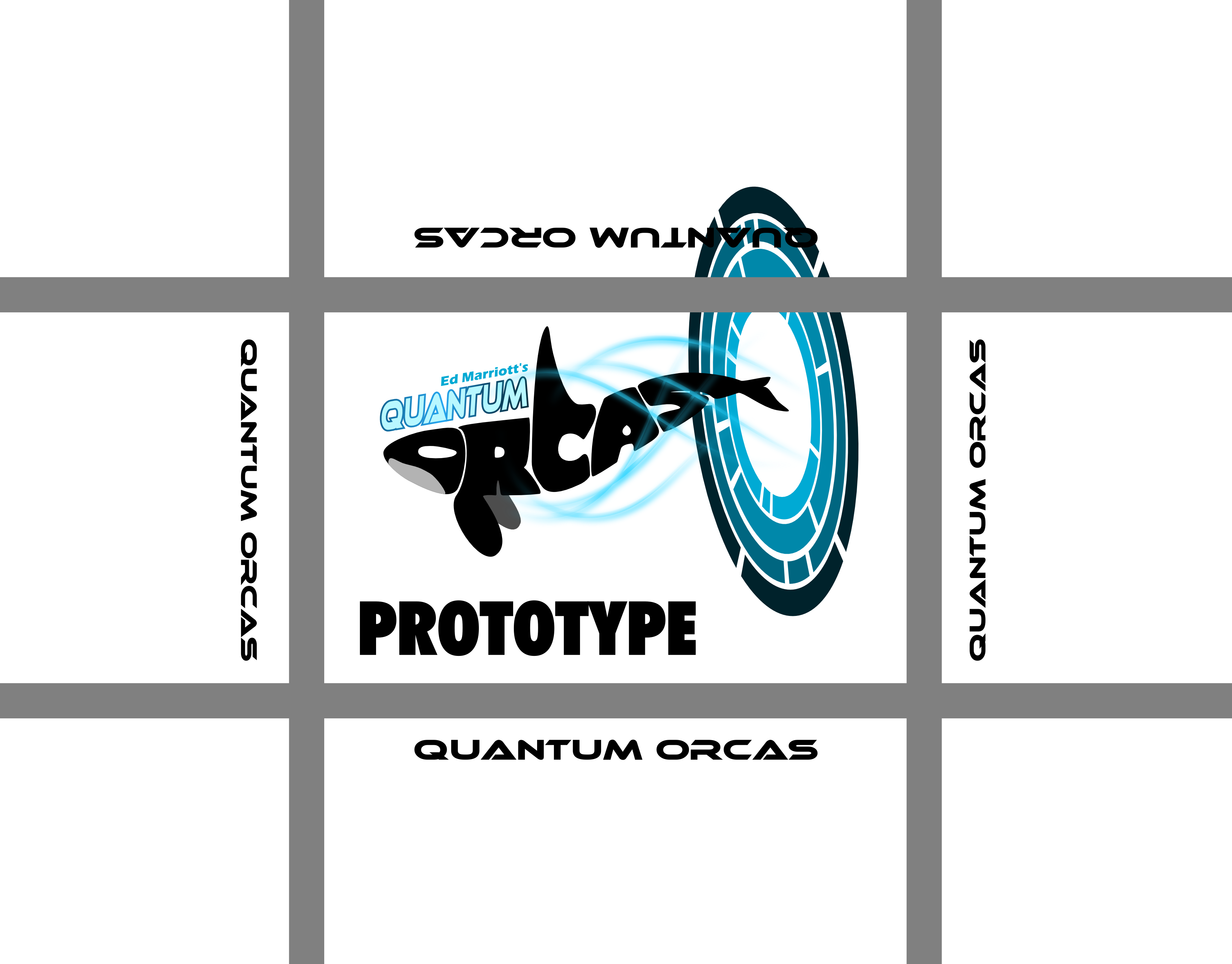
This prototype box will suffice for now.
Last week I worked a little bit on Quantum Orcas. I want to put together a version that I can purchase from The Game Crafter. It is amazing how much artwork really goes into a game. Not only do you need art for the cards, chits, tiles, etc. You also need artwork for the box and the rulebook. Then if you want to have a nice sales page on TGC you need artwork for that page. There is a lot of behinds the scenes artwork that is needed to complete a game.
So last week I put together a bunch of art and Quantum Orcas is getting closer. I still need to do more playtesting to make the game go from playable and “not bad” to something that is enjoyable that people will want to play. I’ll keep you posted.
The other progress I made last week was to come up with new mechanics for Brooklyn Bridge. I have shared the concept of the mechanics with several friends and none of them said it sounded awful. So I might have something there! I am pretty excited about the new utilization of workers. Brooklyn Bridge is a worker placement game, but it uses workers in ways I have not seen before. So I’ll plow forward with this to make it playable in the near future. My goal is to have tested it several times before Protospiel-Milwaukee in March.
***
So that’s the Boards & Barley I enjoyed and the game design progress I made last week. How was your week?
Monday Brews 1-6-14
It is -16 degrees out (as of 7am) and I’m happy that I don’t work outside. I think I’d rather have a foot of snow than -16 degrees. Never the less, today is Monday, so I am reporting on the Boards & Barley that I enjoyed last week, which sadly were few.
The Barley:
Redhook Game Changer: I had the privilege of a private tour (my wife and I were the only guests on the normal tour, so I can refer to it as a private tour) at Redhook in 2010. It is a really awesome brewery in the wine country region northeast of Seattle. They also have a restaurant, which was greatly enjoyable. At the time they did not offer The Game Changer. But I am glad to have tried it. It is a “sessionable” ale according to the website, with 25 IBUs and 4.6% abv. I’d get it again if it happens to be present.
New Glarus Cabin Fever Honey Bock: For a New Year’s party we were hosting I chose to purchase an assortment of local New Glarus beer. This Honey Bock may be one of my favorite beers. It is very clean and has an excellent taste. The honey presence is very mild, but adds significantly to the beer. I wish this were offered year round, though it is probably good that it isn’t.
New Glarus Snowshoe: The other seasonal New Glarus brew I purchased is the Snowshoe Ale. It is an Irish Amber and is deeper in color than the Honey Bock. It is also a very enjoyable brew. New Glarus’ two winter seasonals are outstanding!
The Boards:
Kingdom Builder: We played this on New Year’s Eve with 8 people. And it was pretty awesome. We played with teams where you would site opposite your teammate and you would both play at the same time. We also expanded the board to have 8 sectors instead of 4. I got some cubes from my design supply for the extra players. Overall it worked pretty well with 8. Since the scoring conditions are public knowledge there isn’t a huge disadvantage to any player in the game. And, as with all games of Kingdom Builder, it does sort of come down to the terrain cards that you get.
Balderdash: With the right group Balderdash can be really fun. We had the right group on New Year’s Eve. Unfortunately I am terribly bad at being the reader. I laugh way too hard and people can tell that when I’m laughing it’s not the right answer. But overall, this game can be a lot of fun.
Designer’s Corner:
It was a pretty low key week for me overall. On the design front I came up with two new ideas, neither of which I really want to pursue. One was about a game themed around the White Pass & Yukon Route but focused on how many horses you can keep alive. The other was about the Phoenix and the game would revolve around the idea of the Phoenix dying several times in the game and being reborn, which would change what you can do in the game. So you would have to maximize what you accomplished right before the Phoenix died.
While I think those are both awesome game design concepts, you will recall my article last week about my goals for the year. I’ve already got 6 games that I want to “finish” in 2014. If I start to take on new game concepts then I’m afraid I wouldn’t end up completing any of them.
This week I plan to incorporate some bonuses to Quantum Orcas that will help incentivize players to visit the wormhole locations. If that works well enough, then it will be time for 20 playtests. After 20 playtests, if the game works and is enjoyed by players, then I’ll put together the artwork and post it to The Game Crafter. That is my path forward with Quantum Orcas.
Also this week I plan on moving ahead with a full Trading Post redesign. A while ago I tweeted an image for the redesign:
What I want to accomplish is to make the game centralized on the concept of obtaining goods and trading them. So i now have different areas of the board where your workers can go to obtain different types of goods. They then bring them back to the trading post and trade them for points/abilities/bonuses. Also, the trading portion of the game is now extended to player-to-player trading, which is something that should have been in the design from the beginning. So I’ll sit down and work on the overhaul of Trading Post and see if I can turn it into something fun and awesome!
***
So that’s what I’ve been up to. Did you enjoy any Boards or Barley last week?
 Boards and Barley