Category Archives: The Boards

Tuesday Brews: 9-3-13
Yesterday was Labor Day. That meant I was at home doing anything besides labor. (I actually got quite a bit done). But it also means that I didn’t post a Monday Brews article. Well, today is the Tuesday after Labor Day and I am calling it “Redemption Day,” as I attempt to redeem for the lack of a Monday Brews article.
So let’s get down to the Boards and Barley coverage, where you will find a couple of surprising beverages…
The Barley:
Leinenkugel’s Oktoberfest: Tis the season when the weather changes and Oktoberfests become my go-to brew of choice.
New Glarus Staghorn: This is one of the best, if not the best, Oktoberfests out there. Just plain awesomeness in a bottle!
Ben Franklin’s Honey: I think there are only three bottles of my second homebrew remaining. I’m not sure if that’s a good thing or a bad thing.
 Redd’s Strawberry Ale: The first entry that doesn’t quite seem right here. Over the weekend I saw one of these in my parent’s fridge and figured I should try it. It was VERY sweet and VERY strawberry. It didn’t taste alcoholic at all (and probably wasn’t very alcoholic). If nothing else, it was an interesting taste experiment for my tongue.
Bud Light Lime: Another intriguing outcast that makes the list this week is Bud Light Lime. I’m not sure what happened. One moment I was enjoying a nicer beverage while partaking in a fantasy football draft and then all of a sudden a Bud Light Lime shows up for consumption. I’ll blame the Bud Light Lime if my fantasy football season goes awry.
Leinenkugel’s Summer Shandy: I couldn’t let that list end with an Anheuser-Busch InBev product. So I finished the weekend strong with a nice refreshing summer brew. The Summer Shandy has had a good run. Unfortunately with the weather cooling down and the leaves thinking about changing colors, this product probably won’t be making this list again for a few months. See you next summer, Summer Shandy!
The Boards:
The Little Prince: For future reference, this will likely make this list often over the next few months. So good!
Dungeon Roll: This one will also likely make this list often over the next few months. I played it with my 4yo daughter and let her pull all the treasure tokens out when I earned them. Then at dinner later in the week she was playing with her food and having me “roll” it. Then she would decide whether it was a treasure chest or a monster. There were many more treasure chests than monsters.
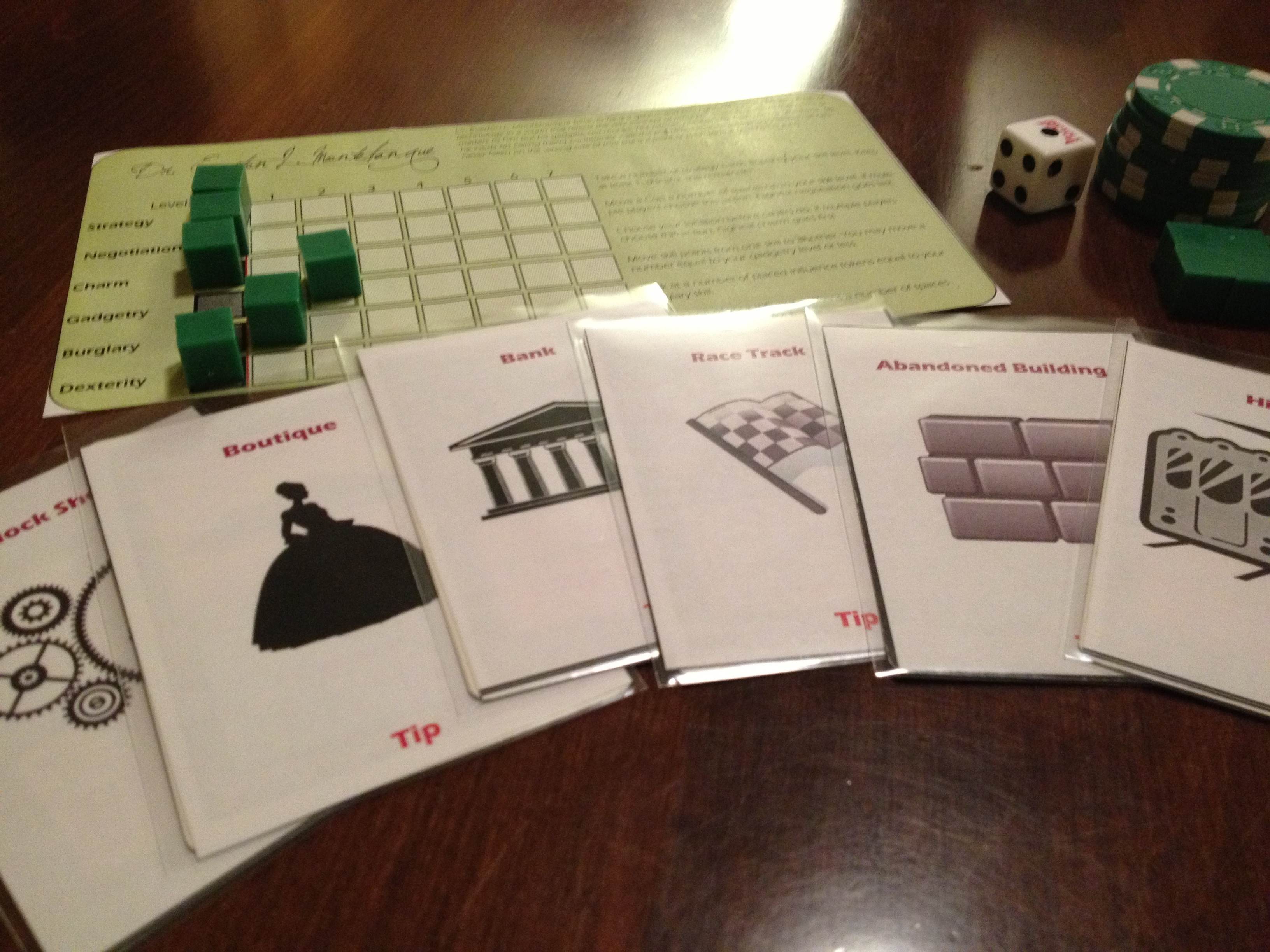
Prototype components for The City Beneath.
The City Beneath: This is my friend Adam Buckingham‘s game based on his novel by the same name. It is a steampunk heist game that very much revolves around the different abilities of the characters. In the game you are trying to get away with the heist while making other people take the blame. It’s still a prototype but it is really enjoyable and I hope he keeps developing it. It definitely has legs!
Mars Needs Mechanics: I’m interested in learning about the original theme of the game. I wanna say it was an African black market or something along those lines. We had a good time playing the game, though we stretched it to handle 5 players instead of the box-recommended limit of 4. The economics of the game are very interesting and the art is very enjoyable. Nicely done Ben Rosset and Bryan Fischer!
Skyline: This could be the go-to filler du jour for a while. It comes in a small box, has awesome dice, and plays relatively quickly. And I think the gameplay is pretty interesting as well. There is a high reward factor when you can top off one of the sky scrapers!
Tsuro: It seems my list is populated with filler material lately. This game is fun and plays very fast.
Scoville: I was able to teach the game to two different groups at my FLGS on Saturday. Two people in the second group said they loved it and would have bought it if it had been on the shelf. At that point I let them know that it will likely be on Kickstarter in November (so keep your eyes open for that!). They also received the buttons that Ken Grazier produced for me!
MarsPost: This was an unpublished prototype that I had the chance to play. It’s a very interesting take on worker placement. The concept is you are mining asteroids from the asteroid belt and utilizing a post on Mars to turn the resources into buildings and thus points. While it is a little rough around the edges I very much enjoyed it!
***
That’s the weekly Boards & Barley. What was your favorite beverage or board game this past week??
Design Me: Worker Placement
I’m starting a new feature on Boards & Barley called “Design Me.” These features will allow me to let my brain spew words onto this site in an effort to come up with a random game design. The idea here is to “exercise” my game design brain and “flex” my game design muscles. Consider it like practice. Athletes go and work out, lift weights, and other things like that. So as a game designer I think we should do the same thing. Bear in mind that this is an exercise and exercises are not nearly as elegant as actually seeing an athlete perform.
Normally Friday’s are review days here on Boards & Barley, but reviews aren’t very fun to write. So I’m switching to this design feature. Now there will be two review Fridays per month and two Design Me Fridays per month. I tweeted a request for a unique theme on which to apply a worker placement theme. The first person to reply wittingly mentioned castles, farming or railroads. Then they mentioned Smurfs. Then someone else mentioned smurfs. Who knew there was so much love out there for the little blue guys. However, the idea I found most interesting came from Tasty Minstrel and I’ll be going with this:
The Rolling Wort Boil
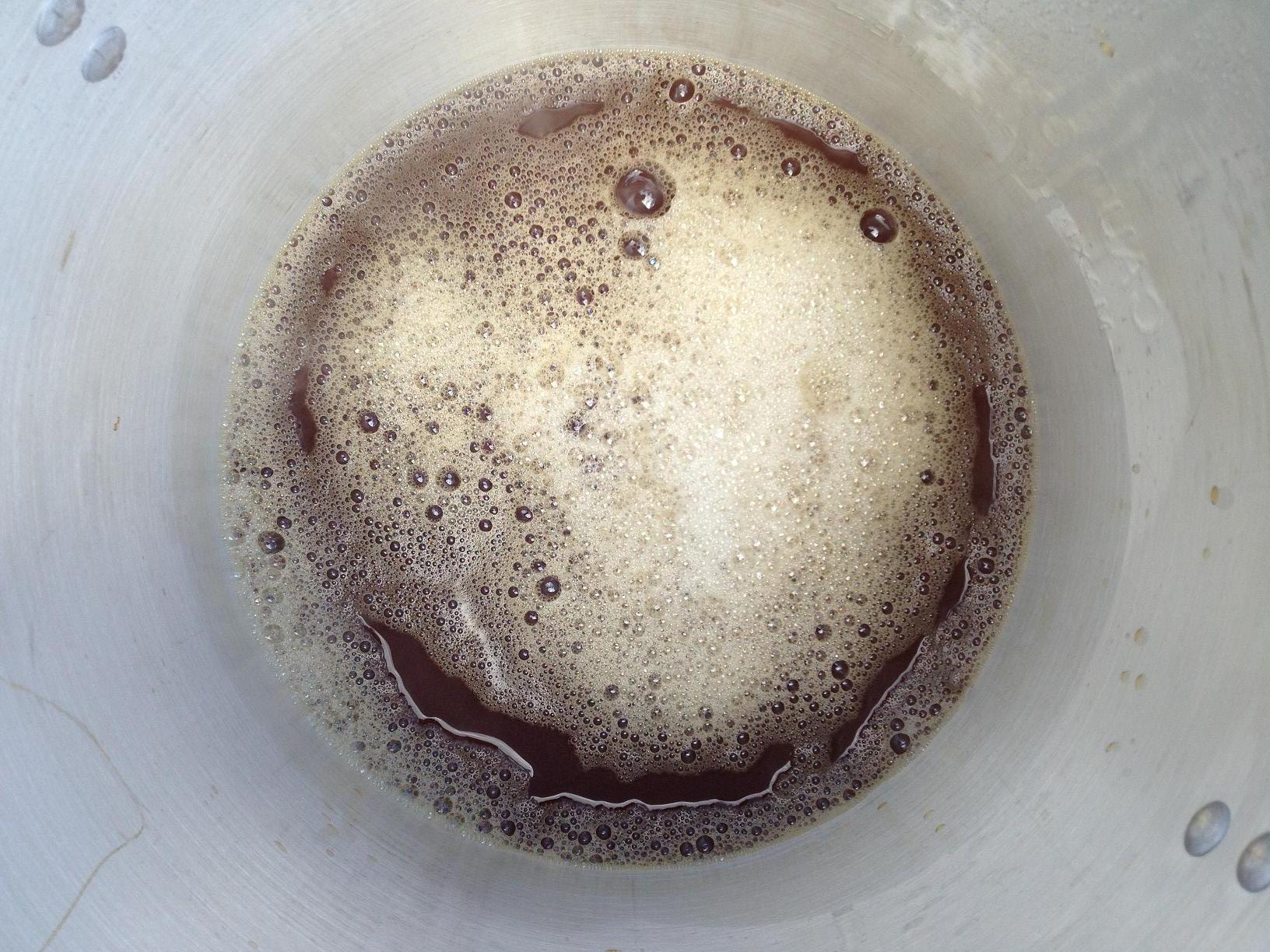
Not a very rolling boil. Hopefully the design rolls better!
First of all, I really enjoy the idea of dice drafting and using dice as workers. It works really well in both Alien Frontiers and The Castles of Burgundy, the latter being one of my favorite games. Granted, they don’t necessarily use dice drafting, but the general concept is there.
So let’s start designing this game…
Brewing beer involves a few different things. You need to gather the right ingredients, gather the right equipment, have a facility, and possess skill in brewing. So let’s break each of those down into different parts of the game.
Here’s the grand concept, a thesis statement of sorts, for the game:
In The Rolling Wort Boil players must utilize the best dice for gathering ingredients and equipment, upgrading your facility, and perfecting the art of craft brewing.
Dice will be used for each of those things. There will be two types of dice. One type will be used to gather the right stuff. The other type will represent people and their skills. Let’s explore the former type first.
The Gathering Dice

Trying to exercise my art skills as well. The top is supposed to be yeast.
I would design the game to be played where each round had a gathering phase and a brewing phase. In the gathering phase each player would roll a number of gathering dice. These dice would have different symbols on them. Those symbols could be grain, water, hops, or yeast.
Each player would roll their gathering dice. Then they would choose one die and pass the rest. They would then choose from the dice that were passed to them. This drafting would continue until all dice were chosen.
These gathering dice then form your team that you can use to go claim ingredients and equipment. What you’re trying to do while drafting is create combinations of dice that you can use. Players could, for example, collect three hops, which would allow them to harvest hops. If someone only gathered two hops, they’d still be allowed to place those on the worker placement spots on the board, but they would go second and get worse hops.
So the way it would work is similar to Alien Frontiers. You need certain combinations of dice to be able to harvest certain things. For hops it could be that you need at least three hops. For Yeast you might need three different symbols, one of which is yeast. Once everyone has drafted, then people could start claiming the worker placement spots with their combinations of dice. As dice are allocated to the board, the players would immediately harvest whatever their dice allow.
So through the dice drafting you are trying to create the best set of dice that will allow you to maximize your combinations, and thus harvest the best/most ingredients. I imagine the gathering of equipment would work the same way.
The Employee Dice
Here’s where things can get a little more interesting. Now we’ve got resources and equipment. We’re homebrewing in our garage. But we have a basic homebrewer with little skill. The employee dice will serve a few different functions. These include increasing skill, increasing quanity, and increasing efficiency. The trick here is that a pool of employee dice are provided by the game based on the locations where people placed their gathering dice.
So the depth of the strategy is not simply in gathering and using resources, but gathering resources so that you can get the employee die into the game that you strongly desire. Turn order would also matter in this case.
Let’s imagine you used three hops dice in the field that provided a “skill” employee die face. If that’s what you really wanted you would have to make sure you go first during the brewing portion of the game so that you can choose the skill die. Perhaps you knew you would not go first when choosing the employee dice. Then maybe you would have put your three hops dice into the fields on the spot that provided a “quantity” employee die. So there’s control over what your gathering, and the resulting employees.
These dice would then be drafted and utilized after the harvest.
How to Play
Each round of The Rolling Wort Boil (tentative name), would include the following phases:
- Dice drafting of gathering dice.
- Placement of gathering dice combos onto the board.
- Harvesting/gathering of ingredients/equipment based on placement.
- Pooling of employee dice from those placements.
- Drafting of employee dice in turn order.
- Usage of employee dice to brew and upgrade your facility.
How to Win
To win The Rolling Wort Boil, players must brew high quality or high quantities of beer. This requires them to maximize their ability to gather as many ingredients as possible, while also increasing their employee’s skills and upgrading their equipment. Each batch of beer they produce would be worth points based on the ingredients used, the skill of the brewer, and the level of the facility. I imagine the game would take 30-45 minutes, have a light-ish feel, and be best played with a Hefeweizen of IPA.
So there’s our first “Design Me” Friday. Any thoughts about the game design? What would you do differently? And most importantly, does the game sound like it’s any fun. Thanks again to Tasty Minstrel for the idea. I’m looking forward to the next Design Me in two weeks.
400th Twitter Follower Giveaway!

Can you win the awesomeness?
Back in March I hit the 200 follower plateau on Twitter. At the time I gave away a copy of Love Letter. This time around, since there are twice as many of you, I’m making the prize that much better! This time I’m going to give away a copy of Smash Up.
Why Smash Up? Because all you Twitter Followers are a smash up of awesomeness with people who write blogs, manage Ludological Portfolios (I’m looking at you, Brian!), design games, playtest games, love games, and even some of you who succumb to the desires of the barley!
Here’s how it works. All you have to do to qualify for the prize is this:
- Live in the US (Sorry international readers. Shipping is expensive)
- Tweet @ me (@EdPMarriott) your best made up smash up deck of beer or board game related factions. It’s doesn’t have to be both. Add #BnBSmashUp to your tweet.
In the game each player has a smash up of two different factions. So one player may be Wizard Ninjas while another player is Robot Dinosaurs. So tweet me your best smash up that’s related to beer and board games! The more creative and interesting, the better chance you have to win!
I’ll choose a winner tonight at 8pm Central. So make sure you have your tweet in before then!
***
UPDATE (8:30pm): The winner has been chosen! Congrats to Eric Leath of Games & Grub for the Smash Up deck that made me laugh and cringe at the same time:
https://twitter.com/GamesAndGrub/status/373176791474507776
And two honorable mentions go to J. Alex Kevern for his nice, rhyming Smash Up Deck and to Todd Edwards for this Specific Gravity Paralysis:
https://twitter.com/Wininoid/status/373210640887709696
Unforunately only Eric wins the prize. Thanks to everyone who participated. I hope you enjoyed the giveaway contest. My next giveaway will be when I hit 600 followers. I’m hoping that giveaway will be a prototype of Scoville!
***
And just for fun I made my own base:
Not very playable, but it helps me celebrate 400+ awesome followers!
The Monday Brews: 8/26/13
Here we are… either recovering from con crud (thankfully I wasn’t struck by that beast) or desperately looking forward to Spiel (alas, I will not be able to attend). Never-the-less we keep pushing forward in our consumption of barley-derived beverages and cardboard creations.
It’s Monday, so it’s time to recap the Boards and Barley that I enjoyed last week:
The Barley:
Leinenkugel’s Honey Weiss: With the summer coming to an end since I live in Wisconsin, I have to finish off the Honey Weiss that I have. So I enjoyed one of these while participating in a Fantasy Football draft. Unfortunately it doesn’t appear to have helped my draft choices.
Leinenkugel’s Oktoberfest: I know, it’s a little early for Oktoberfests. But it’s one of my favorite beer styles, so I enjoy it when I can. I liken it to drinking Egg Nog in November even though it’s really a Christmas beverage.
New Glarus Spotted Cow: This one is a staple for many Wisconsin beer enthusiasts. It’s technically a farmhouse ale, but I would almost put it in a class with cream ales. It’s easy to drink and it’s delicious.
That’s it for the Barley this week. Let’s see what I played:
The Boards:
Hanabi: My level 1 friend Jeremy and I taught Hanabi to our wives. Mine was bored with the game. But she admitted she’d be willing to play it again. I think we ended with 19 points, though, which is pretty decent.

Giving new meaning to “Push Your Luck!”
Via Appia: This was a GenCon purchase of Jeremy’s and I was particularly excited to play it. There is a really cool pusher mechanic where you can try to push stones off and earn the corresponding stone tiles. This game wasn’t a very complicated game, but I had fun with it. I’d like to try it with 3 or 4 players rather than just two. Image from BGG.com.
Scoville: On Saturday I visited with some friends in the Chicago area and they requested to play Scoville! So it hit the table and I was able to try out a newish variant with bonus abilities. They enjoyed the game though one player ended with a really low score. And the bonus abilities worked well enough for me to add them into the rules as a variant.
The Little Prince: If you read my review of the game last Friday then you already know that I really enjoy this game. It is so much fun and I love the little intricacies of the strategy.
Dungeon Roll: I went on a nice solo delve for the first time and was pleased with my result. Using the Archaeologist I was able to score 26 points. My big success was slaying a dragon in Level 2 of the dungeon. I love the whole presentation of the game. It felt like I was actually delving a dungeon and using my heros to defeat enemies. I’m looking forward to my next delve.
So that’s the Boards and Barley I enjoyed last week. But I need to mention one other thing today…
It’s Time for a Giveaway! Almost…
I hit 400 followers on Twitter over the weekend. I can’t believe so many people follow me and read my blog. You all are awesome and I’m inspired by you guys every day. So as a way to show my appreciation for the Twitter game design community I’m giving a game away. I haven’t decided which game to give away, or how I’m going to do it, but later this week I’ll post an article all about it. That will likely be on Thursday. So keep tweeting and enjoying the boards and barley!
Thanks for reading!
The Little Prince: 16 Tiles of Awesomeness

Don’t be fooled. There’s awesomeness inside!
In case you missed it, last week was GenCon. That meant thousands of people (49,000+) visited Indianapolis for the convention and nearly all of them bought board games. One of the games I picked up, despite my lack of interest in the artwork, was The Little Prince, co-designed by famed designers Bruno Cathala and Antoine Bauza.
I love tile laying games. So when I watched W. Eric Martin’s video preview of the game I thought it could be really interesting. And since Bruges was sold out before I even got to GenCon I had a little extra money to spend on other things. For $28 this seemed worth it.
In The Little Prince you will play 16 rounds of the game. On any given round, whomever went last during the previous round gets to choose a type of tile. There are four types of tiles: Characters, Left Curve Edges, Right Curve Edges, and Centers. So the player will choose one type and draw as many tiles as there are players. They are placed face-up. They will then choose a tile, and then they get to choose who gets the next tile. Once all players had chosen then the next round begins.
Here’s a look at the setup (note that you do not actually need the scoring track on the box, but it’s kind of nice to look at):

Here’s the setup. Could it be simpler? (Yes, but not by much)
With fewer players you’ll use fewer tiles, but the gameplay is the same (except for with 2 players). There are also a few things to watch out for in the game. Baobab trees are awesome! Unless you have too many. If you ever get to the point where you have three baobabs on your planet then those three tiles will get flipped over. That’s bad because then you cannot use them for your scoring condition.
Also, volcanoes are no good. Whoever has the most volcanoes on their planet at the end loses a number of points equal to the number of volcanoes.
At the end you will have four scoring conditions that give you points for the things you have on your planet (roses, sheep, lamp posts, etc.). Your goal is to have the most points.
The Upside:
Simplicity: 16 tiles doth a planet make! That’s such an easy thing. It is very simple to play. Just choose a tile and place it down. The location doesn’t even matter so long as you are forming the shape of a planet.
Complexity: 16 sounds like a light game, but there is a lot of strategy in this game. The more players, the better off you’ll be. There are interesting choices of taking a tile that may not score you as much, but could cause another player to lose even more points. There are interesting choices about trying to get in the right spot in turn order. And then near the end of the game there are interesting choices. This game is filled with interesting choices.
The Downside:
Artwork: Originally I was not a fan of the artwork. I’m not familiar with the French story so there is no nostalgic connection for me to the artwork. While I can understand that others may enjoy it, I would definitely be on board to re-theme this one. I could consider myself a fan of the artwork on the basis of others enjoying that nostalgic feeling.
Designer Perspective: What would I change?
Other than re-theming there’s only one change I would make. I would add more scoring characters so that there are no duplicates. In my first game I had both lamp post scoring characters, and I had 13 lamp posts on my planet. With duplicate scoring characters there is a potential for making a huge killing. While I understand that there is also strategy inherent due to the duplicate scoring cards, I’d prefer there be no duplicate scoring cards.
Beer Pairing:

Parfait! (That’s French for “Perfect”)
What we have here is an interesting conundrum. First, the game is based on a French book, so I’m inclined to choose a wine pairing instead of beer. (No worries, that sort of blasphemy won’t happen here!). Second, the game itself is so simple and light, yet so deep with strategy. I have to choose a beer that fits that characteristic. I’d like to choose a French beer, but unfortunately France just isn’t known for it’s beer. So my preferred beer pairing for this light yet deep game is Stella Artois. (It’s close enough to France!) This beer meets the characteristics of the story and the game. It is a lighter beer but has a beautiful depth to it. I think with it’s hoity toity glass with the gold rim (not pictured), it would be a very nice fit with The Little Prince.
Overall Rating:
Disclaimer: I’ve only played the game twice, but I think it was a lot of fun. My wife played it with me and immediately afterward wanted to play again. That makes me bump the rating up a little bit. This game is very accessible. It has some awesome depth to the strategy. And it plays quickly. This will hopefully become our group’s go-to filler for a while. I know that I won’t turn down a game of it! For now I’ll rate this a 9 on the BoardGameGeek rating scale.

Excellent game. Always want to play it.
 Boards and Barley