Category Archives: The Boards
Two Types of Game Nights
My friend Jeremy and I have been hosting board game nights for quite a while now and I’ve come to a realization lately that there are two different types of game night. There is the type of board game night where you get a bunch of people together and struggle to decide what to play based on number of players, difficulty to learn, setup time, etc. Let’s call this the “Big” game night. Then there is the type of board game night with only a few people where you choose to play the heavier, deeper, more intense games that typically can’t make a showing at the first type of board game night. Let’s call this the “Level 1” game night.
Today I’m going to examine the ups and downs of each type! Note: I’ll write about Board Game Days in a separate article.
Big Game Nights
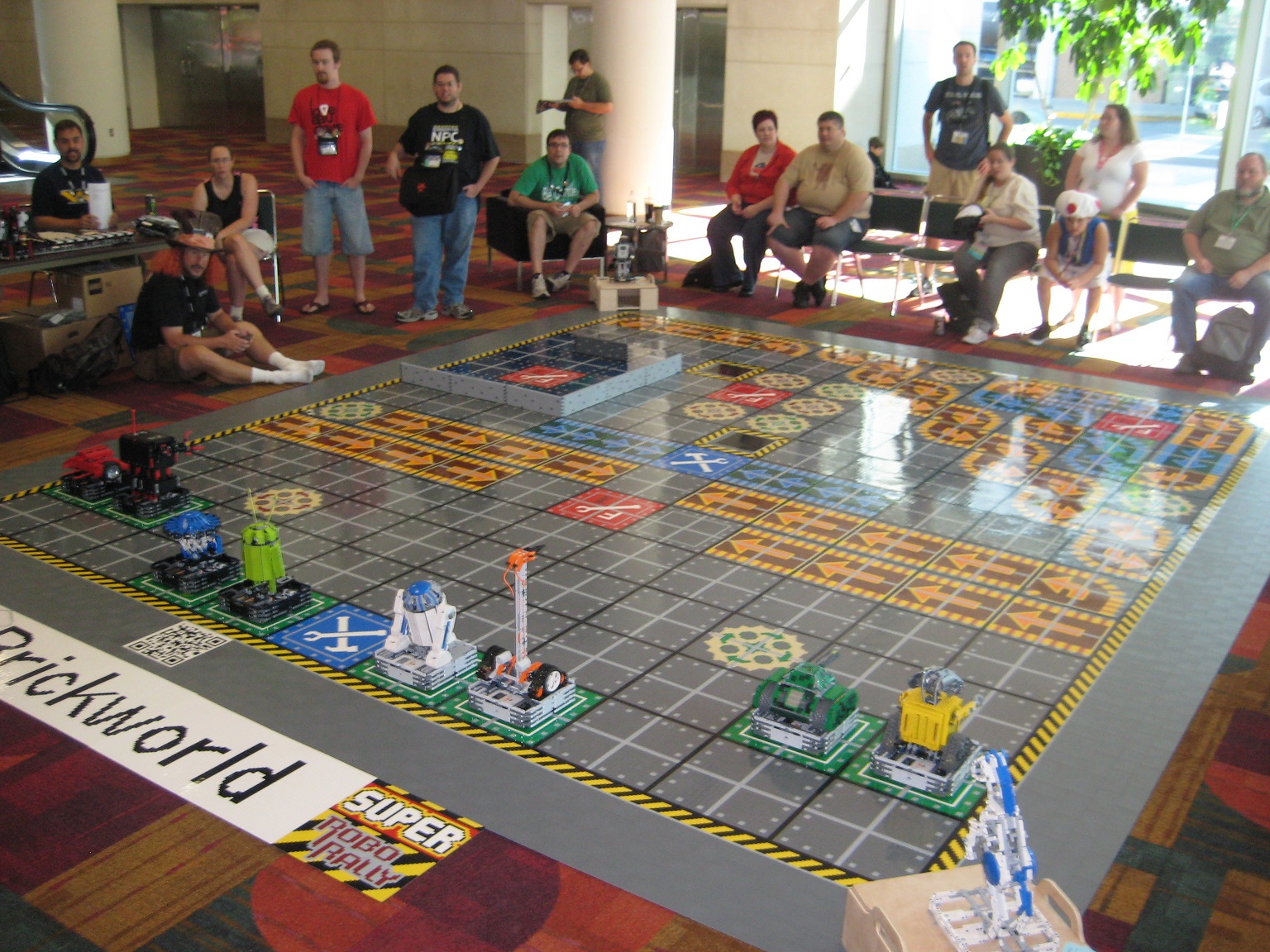
Big, as in a large number of gamers. Not the size of the game!
I love big game night. But that’s partially because I love any game night! It’s great to get a bunch of guys (note: I’m not sexist… my group is just all guys) together for some board game awesomeness. But it’s not all rainbows and unicorns. There are some downsides to the Big game night, at least compared with the Level 1 game night. Let’s look at the good things first:
- You’re playing games, perhaps enjoying a nice brew, and escaping all the other junk of life.
- You might even be enjoying some nice refreshments.
- With more gamers you often have more games to choose from.
- Robo Rally. Chaos embodied in a board game can be quite entertaining!
There you go… the upside to the Big game night. What downside could there possibly be?
- You might wreck your budget trying to buy games for 8 or 10 players.
- Nuns on the Run, a hide-and-seek nun game, just doesn’t have the right theme!
- Players might get sick of finishing the night with a lap of Bisikle every time (gasp!).
- Indecision enters the gaming arena. Players struggle to agree on what to play.
- It’s often more difficult to break out new games. It always feels like you’re teaching new people old stuff.
- It’s often more difficult to break out heavy games. Big game night is more open to the casual player.

An 8-player recommendation!
When our group was getting to 8 regular attenders I really did a search for 8+ player games. At one point I was ready to pull the trigger on Nuns on the Run. I ultimately went with Robo Rally, which ended up being a great choice. I also looked into Formula D, but never bought it. One of the issues with a larger board game night is that it is hard for everyone to play a game together. One 8-player game that I’ve found to be a lot of fun is VivaJava: The Coffee Game by designer TC Petty III and published by DiceHateMe Games.
The problem is that most games are not 8 player games. That means what was a big group of people is now split in two or three. That’s often less fun. You’ve got cross-table banter. People feel left out of the other table’s conversation, and a disconnect forms. Don’t get me wrong, it’s still a lot of fun… just not as fun as the “Level 1” game night!
Level 1 Game Nights
Several of us in our group use the phrase “Level 1” to refer to each other as awesome, tight, “I got your back” type of friends. On occasion we have an impromptu “Level 1” game night where it’s just a small group of us getting together. I wanted to refer to these game nights as “Intimate” but that just didn’t feel appropriate with all the finger-bending. These nights include the kind of friends you never hesitate to play any game with. These game nights also have an upside and a downside. This time let’s start with the downside:
- Less beer options to choose from.
- Fewer refreshments.

3 hour games are acceptable at Level 1 Game Nights!
While those two can be tough to swallow, the Level 1 game night can make up for that in the quality of the games that hit the table. Here’s the upside:
- Heavier games make the table. Enter Uwe Rosenberg and Stefan Feld!
- New games can be played since there is usually a high willingness to learn together.
- Playtesting of prototypes happens more freely.
- You’ve learned what to expect from the other players.
- Inside jokes, Jerks!
- You never have to split into multiple games.
There’s a lot to enjoy with a Level 1 game night! But the bottom line here is that any game night can be fun. Go into them with the right expectations and you’ll have a good time. And remember, playing to win and playing to have fun are not necessarily the same. So get to your local game night and have a great time!
Board Game Review: Belfort by TMG

Gnomes, Dwarves, and Elves. But no Pixies… yet!
It’s Friday, which means it’s Board Game Review day! Today I’m reviewing Belfort by Tasty Minstrel Games, which currently has an awesome expansion available on Kickstarter (KS link) for only $20. So since the Kickstarter campaign is live I figured now is as good a time as ever to post this review!
In Belfort players take on the role of a builder who has been hired to build the castle Belfort. Unfortunately, other builders were also hired in a mix-up. So you are tasked with being the best builder of the castle. To do that you have to make effective use your elves and dwarves with a worker placement mechanic in various spots throughout the city. Leftover elves and dwarves can be used to claim wood, stone, metal, or gold. Decisions in this game get tough and heavy. But that makes it awesome. The other part of the game involves building the buildings of the castle to claim a majority of a district. That’s how players can obtain points, which are needed for victory. When you’re ready to visit the Pub for some Master Dwarf action, or the Blacksmith to get some metal, then grab your friends and sit down for a game of Belfort!
Here’s a look at all of the awesomeness that is Belfort (image from BoardGameGeek.com):

This game is awesome!
I’ve played this game a bunch and I totally love it. But the real question is who can find the Ton Ton from Hoth on the game board first?
The Upside:
- ARTWORK: I must start with the artwork. This game is so visually stunning that I sometimes set it up just to stare at it (not true). It just looks so good that I must give a shout out to artist Joshua Cappel! Excellent work!
- STRATEGY: This game looks too fun to be a heavy strategy game, but that’s exactly what this is! There is a lot of strategy behind each decision from the first turn throughout the whole game. Players have to optimize their workers capabilities and then optimize which building to build and where to build it. There’s a lot to think about in this game!
- THEME: The theme of building a castle with your hired elves and dwarves is a lot of fun.It is easy to get immersed in this game and feel like you are really putting your elves and dwarves to work. And everything works together thematically, which always makes a game better!
The Downside:
- ANALYSIS PARALYSIS PRONE: While I am a player that enjoys heavy strategy and tough decisions, there are some players that I play games with that would struggle mightily with indecision throughout this game. There would be times where they wouldn’t know what to do or why they are doing it. Beware that this can lead to long games.
- SETUP TIME: This game has a ton of components. Thus, it requires a higher than average setup time. If you know you’re playing this game during your board game night perhaps you should set it up beforehand!
Designer Perspective – What I Would Change:
Belfort is a brilliantly designed game of worker placement and area control. The upcoming expansion looks like it will enhance the game greatly, so I won’t offer anything that the expansion is already doing (or at least that I know of it doing). If I were to change anything I think I’d add the ability of players to swap buildings between districts. This would add a huge “screw-you” factor to the game, but might also unbalance the game. By being able to swap my Inn in district 1 with you Inn in District 2 I could gain the majority in both! Bonus!
Beer Pairing:
 I would normally pair this game with a heavy beer since the game is a heavy game. However, I just can’t imagine the worker elves and dwarves sipping a heavy, gentlemen’s beer after a hard day of work on the castle. So my preferred beer pairing is one that drinks easily, tastes great, and would work perfectly in the hands of elves and dwarves. And that beer is New Glarus‘ Cabin Fever Honey Bock. It is a very tasty beer brewed with clover honey, but not too much. And it goes great with brats, BBQ, and Belfort!
OVERALL RATING:
This was at the top of my Christmas list a couple year’s ago and it has lived up to that! Belfort is a great game that is a ton of fun to play. There is deep strategy, awesome artwork, and a lot of tense decisions. I can’t wait for the expansion to come out! I will rate Belfort 9 out of 10 on the BoardGameGeek rating system!

Excellent game. Always want to play it.
GDP: Playtesting Big Picture
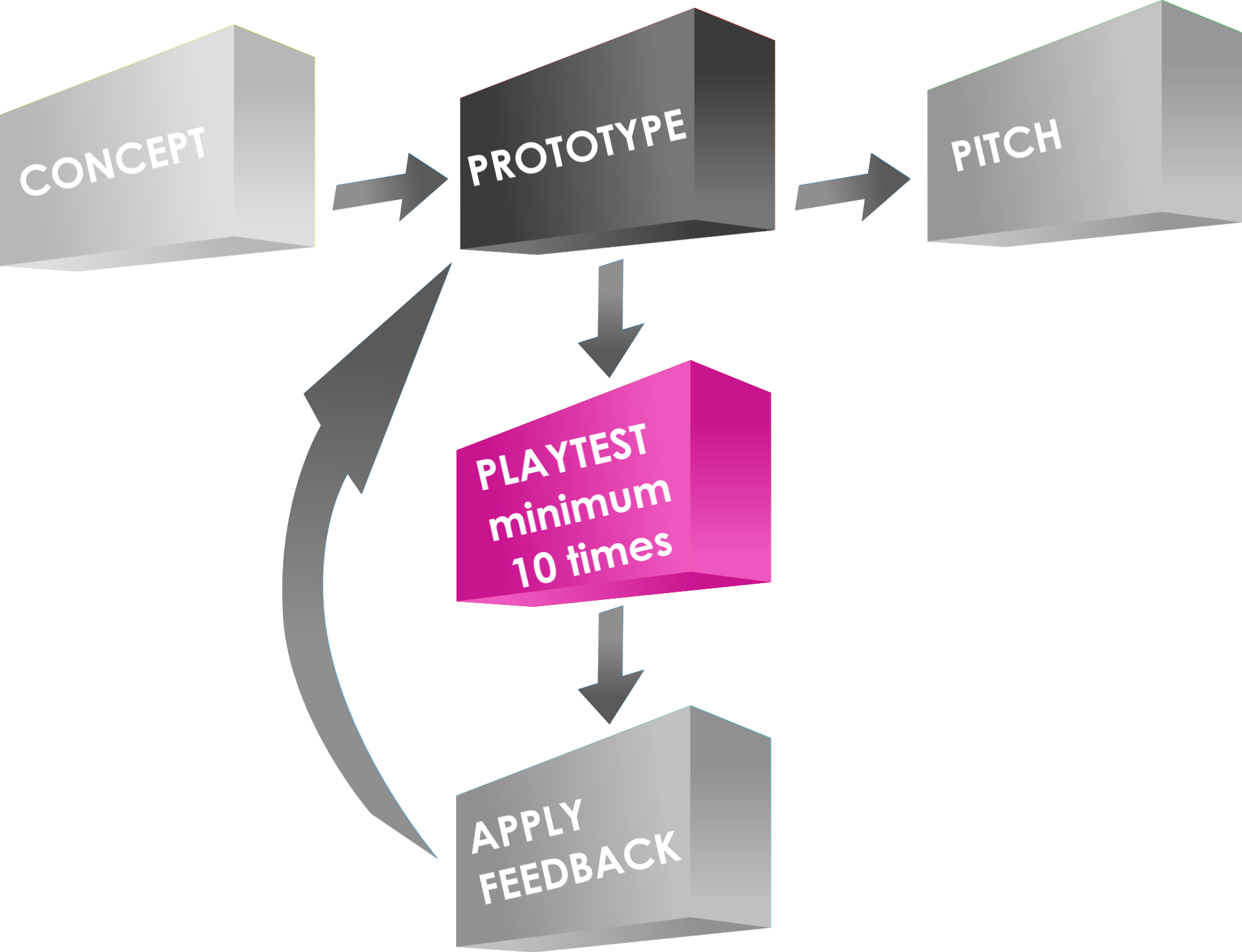
Perhaps the most important step in the Game Design process!
First things first… should there be a space between the words “play” and “test”? Does it matter? I prefer them together so for the duration of today’s article I will refer to it as playtesting.
Today I am continuing a series of articles about my take on the Game Design Process (GDP). It’s Friday so there’s probably a few of you out there who will be playing games tonight. And I’m guessing a few of you will be playing unpublished games that need playtesting. So this article should be of some assistance today!
Let’s imagine the playtesting process as if we’re carving a sculpture into stone. (In fact, one could reasonably treat the entire game design process in a similar way). For this article let’s assume you’ve already chosen the stone you want to carve (this is equivalent to creating your CONCEPT and creating the first PROTOTYPE). As Michaelangelo said (notes in parentheses are mine):
Every block of stone (protoype) has a statue (refined/perfected game) inside it and it is the task of the sculptor (designer & playtesters) to discover it.
So today I’m going to cover how the playtesting process takes that raw stone of a prototype and carves it down into something that is beautiful!
Rough Cut that Stone! (Playtest #1)

What exciting sculpture is within, waiting to be found?
So you’ve chosen your concept, decided on your mechanics, and created your first prototype. It’s time to rough cut that stone.
Getting the prototype to the table is an exciting moment! You’re ready to try it out. Don’t let disappointment cloud your excitement. And don’t expect things to work perfectly.
The goal of playtest #1, like rough cutting a stone, is to get rid of the large chunks that need not be there. To put it in gaming terms, find what’s broken. If there are broken mechanics, either eliminate them or chip away at them. The more you chip away, the closer you’ll get to a beautiful game!
Playtest #1 should be a solo playtest. Don’t submit your friends to something that is likely to be a waste of their time. Note: it will not be a waste of your time. Playtest #1 is a HUGE step in the game design process. But do it by yourself.
When sitting down for your first playtest I recommend having some questions prepared in advance. These can be things like whether or not you think mechanic A is broken, or whether mechanic B doesn’t work quite right, or whether the cards are balanced enough. For games with a lot of depth/detail it’s important to ignore the small things during this first playtest and even the first ten playtests. Remember, we are looking at the big picture here. We’re rough cutting the stone. So go ahead and rough cut your game!
Shaping that Stone! (Playtests #2-10)
Here’s a rule of thumb I try to follow when playtesting:
Don’t change things on the fly while playtesting, never change more than one thing at a time, and make sure you have enough plays under your belt to be able to compare your changes to the previous form (10 playtests seems appropriate).
Following this rule means that playtests 2-10 will be run with the same rules/components/etc. Since you’ve already rough cut your game via Playtest #1, feel free to invite your friends over to try it out. By getting 10 playtests under your belt you’ll begin to get a feel for what the beautiful sculpture within the stone actually looks like. Those first 10 playtests should provide a lot of great feedback.
But don’t change anything during those first ten plays unless there are things which obviously don’t work or are broken. These sorts of things should have been cleared up during solo Playtest #1.
During Playtests 2-10 try to pay attention to what people are saying about the game, how they react to certain elements, and most importantly pay attention to any feedback that is mentioned by different players independently. The more people that mention the same thing, the more important that thing is.
Fine Shaping that Stone (Subsequent Playtests in increments of 10)
From here forward you are in the “Fine Shaping” realm of game design. This is a VERY important section of game design. This is were things really begin to look like a final product. The objective here is to take each element of the game and work on making it beautiful. Here’s a list of things to pay attention to during these subsequent playtests:
- What is your goal/objective with this game design?
- How well does each mechanic work?
- Does each mechanic do what I want it to do? (Note: this is different from the previous bullet)
- What portions of the game are players responding positively/negatively to?
- When implementing new things (every 10 playtests) how are players reacting differently from the previous version?
- How well are things balanced? Do players always make the same choices? Is there only one path to victory?
- Pay attention to Downtime, Kingmaking, Runaway Leader, Tension, Endgame Awesomeness.
Those are just some of the things I try to pay attention to when playtesting. But the point of emphasis is not to change things except for every 10 playtests. If you change things sooner than that you’ll likely not have a good enough understanding of your game to really be able to tell if it has gotten better or worse.
That’s also why it’s important not to change two things at once. If you change two things and the game gets worse, how will you know which one caused it? Sure, sometimes it might be obvious, but it’s still an unnecessary risk. Change one thing at a time every 10 playtests so that you get to know your game really well.
Smoothing that Stone
We’re getting to the fun point. You’ve rough cut the game, you’ve shaped it, and you’ve refined it. You’re almost there. Once you’ve done a lot of playtests it’s time to start thinking about finishing it off and making a high level prototype. This is where things get a little different from the sculpting stone analogy.
When sculpting a stone, once you remove a chunk of that stone it’s gone forever. But with game design you can always add material back into the game. I chose the stone sculpting analogy because I am a proponent of keeping the game design simple. Here’s a lesson I’ve learned along the way:
It’s easy to add complexity and detail. It’s very difficult to simplify down to the game you actually want.
By this point in the game design process with numerous playtests under your belt you should only have to be changing small details. You should be at the point where you can see the beauty of your work. There’s just small imperfections in it. So smooth them away with refining.
The “Final” Product

A masterpiece, just like your game design after numerous playtests!
You’ve done all the dirty work. You’ve chipped away, you’ve refined, you’ve smoothed it out. You’re all set to pitch the game (which is something I know nothing about!). Your beautiful product is “complete.”
Okay, the word “Complete” is an absolute misnomer unless you publish the game yourself exactly how it is. Unlike a sculpture, board games can continue to be worked on incessantly. My perspective is to get the game to a point where you are confident in sending it to a publisher, and then send it to a publisher! If they sign your game, they might change it from something like David into something like the Sistine Chapel but it will still be YOUR work of art!
This has been a sort of 10,000 foot view of playtesting. In the future I’ll write another article more focused on an individual playtest session. Thanks for reading!
BGR: Last Will

Yes. It’s like Brewster’s Millions.
Another Board Game Review! This time I’m reviewing Last Will by Czech Games Edition and designer Vladimír Suchý.
In Last Will you have received an inheritance of sorts from your deceased Uncle. But before you can “earn” the inheritance you have to prove yourself worthy of it! How do you do that? By spending an allotment of cash faster than your cousins. You’ll have to buy residences, farms, and mansions. You’ll have to throw extravagant balls. You’ll have to hire outstanding workers. And more! If you can go the furthest into debt, then you win!
This game has players fighting to get rid of their money the fastest. Can you outwit your cousins and spend you allotment first? Or will you be stuck with valuable properties? If you’re ready to spend spend spend, then it’s time to play Last Will (Ben McQuiston’s 2012 Game of the Year! – personal shout out)
Here’s a sneak peek at the game:
Okay… that’s obviously not the game, but it’s the same idea!
Here’s a look at the setup of the game (Image from BoardGameGeek.com):

Look at those awesome Top Hats! This shows a two-player game.
The Upside:
ARTWORK: This is easily some of my favorite board game artwork! Everything is thematically cohesive. It looks amazing. The colors are brilliant. And they spared no expense! I also like that they avoided game-dependent text on the cards, despite the fact that I have to reference the back page of the rulebook for the iconography about two dozen times per game. Really outstanding artwork!
THEME: The theme for this is fresh, unique, and interesting. Having a game where you have to get rid of all your money is so different than the majority of games out there. But all of the mechanics in the game fit the theme really well.
DOWNTIME: One of the things that can take a good game and turn it sour is an abundance of downtime. In Last Will there is very little downtime. This is because in the main action phase all the players can perform their actions at the same time. That’s pretty solid game design!
The Downside:
FIRST PLAY: The first time you attempt Last Will will likely be rough. New players typically have no idea what to do. Why should they buy a building? How does depreciation work? What do companions do? There are a lot of areas where they can get confused. If you’ve only played this game once and were confused, I highly recommend giving it another shot.
ICONOGRAPHY (SYMBOLOGY??): There are a lot of icons (symbols?) in this game. Like I mentioned above, I have to reference the table on the back of the rules multiple times throughout the game. This can be overwhelming to non-gamers or light-gamers.
AP-PRONE: Yes, there are an abundance of decisions to make in this game. And they are tough decisions. I don’t recommend playing this with your AP friends unless you plan on talking with your non-AP friends a bunch during the game. Or you’re incessantly patient.
Designer Perspective – What I Would Change:
As a designer I can really appreciate how well this game is balanced. The design process must have been a beast for this game. There are so many interweaving things within the design. The gameplay works really well. The artwork is outstanding. And the theme is great. The only thing I would be tempted to change is the iconography. It looks nice, but I think the icons could be a little more clear on what they represent. They just are not very intuitive.
Beer Pairing:

This seems like a gentlemen’s (lady’s) game and I prefer to play while enjoying a gentlemen’s beer. And to me a fine example of a gentlemen’s beer is a Scotch Ale. I’m keeping it close to home with this beer pairing and I’m recommending Lake Louie’s Warped Speed Scotch Ale. It’s an excellent beer that goes well with this excellent game! A secondary local option would be Ale Asylum’s Sticky McDoogle! That’s also a great Scotch Ale that is as enjoyable as this game. Either way, you can’t go wrong!
OVERALL RATING:
I’ve played Last Will a half dozen times. I’ve enjoyed each play. There is a great amount of variability. The theme and artwork are awesome. And there is a lot of awesome strategy that keeps me wanting more. I yearn to be better at this game. I’ve won at least once and I’m hoping to win again soon, but just playing this one is a lot of fun! Just get past that first play and this game really becomes outstanding. I’ll rate it 8 out of 10 according to the BoardGameGeek rating system:

Very good game. I like to play it. Probably I’ll suggest it and will never turn down a game.
Scoville Print And Play Now Available!

Let the awesomeness be printed and played!
For those interested I have posted Version 0.1 of Print and Play files for Scoville, including the Rules, onto Board Game Geek. You can follow this link to obtain them:
BoardGameGeek: Unpublished Prototype: Scoville Rules & PnP
If you decide to print it out and play it I’d be happy to answer any questions. Just leave a comment below! I’d also be VERY interested in hearing your feedback from your plays of the game. So let’s stay in touch and make this game as best as it can be!
You can also hit me up on Twitter (@EdPMarriott) if you have any questions.
Thanks!
 Boards and Barley