Category Archives: The Boards
Monday Brews – Kickstarter Shout Outs
Hi everyone. Welcome back to Boards & Barley! I hope you had a great weekend. On Mondays I normally post about the board games and beer I enjoyed over the past week or two. But today I’m going to do something different.
Why am I changing things up? Well, my budget has precluded me from backing KS projects lately. But there are several projects, designers, and publishers that I would have supported had the budget allowed it. So since I can’t back the projects I decided I can at least promote them a little! So I’m listing four current Kickstarter board game projects that I believe in. I recommend you check these out.
We’ll start with a game from a friend and local game designer Seth Van Orden…

Stockpile

Do you have what it takes?
Stockpile, by Seth Van Orden and Nauvoo Games, is a stock market game where players have high control over manipulating the market.
In the game players are trying to maximize the market value of the stocks they own. This is done by choosing which cards you want to place face up and which cards you want to place face down. Once all players have placed they will bid over which pile they want. Eventually all players will receive a pile of cards. The cards are now reconciled by manipulating the market or dealing with a negative event.
The ultimate goal is for players to best manage the market in their favor.
This game has three days left on Kickstarter and is sitting at about 90% funding. Go help them out! $39 gets you a copy.
DragonFlame

Burn, baby, burn!
DragonFlame was my favorite game played at the recent Protospiel-Madison. Designed by Matt Loomis and being published by Minion Games, this game is packed with amazing artwork and fun gameplay.
In DragonFlame you are a dragon and your desire is to burn down the towns! To do so players will have a hand of cards. Then they will take turns placing cards either face up or face down onto one of the castles. Once all cards are played then in turn order each player claims a castle and its cards. This determines the player order for the next round.
Players will score points for burning the villages, which they can do when they receive DragonFlame cards, or for collecting treasures and avoiding knights. After six rounds, the player with the most points wins.
Rob Lundy did the artwork for DragonFlame and it really looks amazing. I’ll be buying this game when it comes out (and my budget allows for it). Go burn some villages!
It has 17 days left and $25 gets you a copy.
Steampunk Rally

That’s no bored European!
New publisher Roxley Games has their first Kickstarter project up and it looks fantastic!
Steampunk Rally is a race game involving great inventors from Edison and Tesla to Marie Curie and George Washington Carver. These are some of the greatest minds of the past and they figured the best way to find out who is the smartest is to have a race through the Alps. So each of them is set to build the best machine to win the race.
Using card drafting and dice placement players will build their machine and then operate in the hopes of winning the race.
The artwork for this game is astonishing and I would back it for that alone! Go grind some gears and check it out!
Steampunk Rally has 10 days to go. $49 US gets you a copy!
New Bedford

A Whale of a Game! (Couldn’t help myself)
New Bedford is the game I most regret that I’m unable to back. I played this for the first time a year ago at BGG.Con with Chris from Dice Hate Me Games. It is a truly great and enjoyable game.
Nat Levan is the designer and you can check out his blog here: Oakleaf Games. He has written extensively about his design process for New Bedford.
In the game you are helped to develop the town of New Bedford. You can utilize resources and send ships to see to capture whales, which provide income. This is a worker placement game that is streamlined and efficient. It is really enjoyable to play. So much so that I made my own copy with the PNP files from the Kickstarter page.
Also, they do a great job dealing with what some people consider a controversial topic. I applaud Dice Hate Me for that.
Go grab your harpoon and hit the open seas!
New Bedford has 27 days left and is 50% funded. Grab a copy for $40.
The Purpose of Expansions
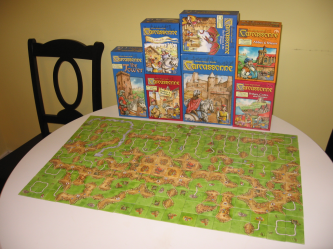
Carcassonne and several of its expansions. Photo via wordsgoneby.blogspot.com.
Scoville is on the ocean in a container on a massive vessel (info via latest KS update). That’s pretty sweet and it means that the time is rapidly approaching when all of the awesome Kickstarter backers will be able to get Scoville to the table! I couldn’t be more excited.
So naturally I might as well begin work on an expansion (which I playtested last week!). Working on it has brought me to the question of “What is the purpose of an Expansion?” Today I’ll briefly try to address that. Throughout I’ll be using Carcassonne and Ticket to Ride as examples.
From a designer’s perspective here are the three main reasons I think a game should receive an expansion :
- Increase Replayability and Variability
- Add something new
- Add depth
And here are three reasons a publisher may want to publish an expansion (in addition to those above, of course):
- Sell more of the original game
- Make money at a higher margin since expansions don’t typically cost as much
- Provide more quality products to help build your catalog
Obviously the designer reasons and the publisher reasons that I provided are not nearly exhaustive, so take that however you want. I’ll only be covering the reasons for an expansion from the designer’s perspective. At the end I’ll also provide some things that an expansion SHOULD NOT do.
Increase Replayability and Variability
One of the things I like to design into my games is the ability to play it over and over and never have the same experience.I like to define Replayability and Variability thusly:
REPLAYABILITY: When a game can be played over and over again without it feeling old and “samey” despite the setup and game conditions being identical.
VARIABILITY: When a game presents different scenarios for play such that no two plays could ever be identical.

Kingdom Builder – Variable Setup FTW!
Those sound the same and they basically mean the same thing to me. The point is that I do not want to play a game the exact same way it was played prior. That turns the players into robots seeking to find the optimal plays in a game. I prefer games where it is different based on who you are playing with or how the game is designed.
This can be accomplished in several ways but most often via randomness. Sometimes the original design doesn’t receive all the variability the game deserves. Other times the designer comes up with new ways to increase variability after the game is published. Either way, creating an expansion is a great way to bring the game to people’s tables again and make the experience better.
Some of my favorite examples of expansions increasing the replayability/variability of a game are the Carcassonne expansions. (They actually meet all three “expansion” criteria I am mentioning today, so I’ll use this example for each below as well.) The Carcassonne expansions add replayability because they implement situations that are different based on the people you are playing with and based on the tiles you draw.
But perhaps the best instance that I can think of for variability is with the random board setup and scoring conditions from Kingdom Builder. That is one of the most replayable and variable games in my collection and that doesn’t necessarily refer to the expansions.
Add Something New

Add something new… like new routes to Ticket to Ride!
Sometimes a game is deserving of a new addition that changes the game and how it is played. Adding something new to a game can make players want to play it again. It can be a new mechanic, new components, new cards, dice, etc.
Adding something new doesn’t necessarily add depth. Adding new elements can simply make the game enjoyable to play again.
In the Carcassonne world, the Inns and Cathedrals expansion did not really increase depth. Rather, by adding something new it lured gamers to play again and again. The Inns and Cathedrals addition is very minor but it adds enough to change the way people play the game.
Another example is the USA 1910 expansion for Ticket to Ride. Basically it adds a bunch of routes without changing any rules. This is such a simple and smooth expansion to integrate with the base game. Designer’s should keep these sorts of additions in mind with creating expansions.
An easy (actually ridiculously easy) way to expand Scoville is to design a whole bunch of new recipes that utilize previously unused combinations of peppers. This would add something new to the game without changing a single rule. Ironically I hadn’t thought of that until just now, while writing the article. I will be creating 20 new recipes!
Add Depth

Grain, Beer, and Fruit by the Foot!
Often an expansion will provide ways to make a game deeper strategically, tactically, or even thematically. This usually coincides with adding something new. A new mechanic can be added to the game that changes the gameplay or injects depth of decisions. Or perhaps new components are added that add depth via breadth (is that even possible?). I suppose that would be something like instead of limiting the game to four different resources, you could bump it to 6, which could add depth.
The idea behind this reason is to take a game that players have become familiar with and make it deeper. Sometimes players refer to this as “heavier.”
In Carcassonne the Traders and Builders expansion adds notable depth. Players have the objectives of finishing castles such that they earn the bonus tokens of Grain, Beer, and Fruit by the Foot (or maybe grain, wine, and cloth… not sure). This sort of depth adds a distinct layer to the strategy players utilize during the game.
What Expansions SHOULD NOT do…
I am of the opinion that expansions should not:
- Cost more than the base game (Though I suppose an argument could be made for certain situations).
- Change the base game so dramatically that it is a completely different thing.
- Detract from the original concept of the base game.
- Add an overwhelming number of new rules or exceptions to rules.
- Modify the original rules.

Not an expansion.
So the simplest way to create an expansion is to simply add some new components like the Ticket to Ride USA 1910 expansion. That expansion did not cost more than the base game. It did not change the base game at all. It did not detract from the original concept. It added zero new rules. And it did not modify the rules. That’s a streamlined expansion.
When expansions violate the 5 points I listed then they start to break away from what I consider an expansion and fall more in line with a whole new game. This would be akin to Ticket to Ride – Europe. The base game is the same but there are new components, new rules, and the original rules were modified enough that this doesn’t meet my criteria for an expansion.
NOTE: Ticket to Ride – Europe was neither marketed nor sold as an expansion.
So what do you think? What makes an expansion worthwhile to you? What are some of you favorite and least favorite expansions? Thanks for reading!

Monday Brews 9-29-14
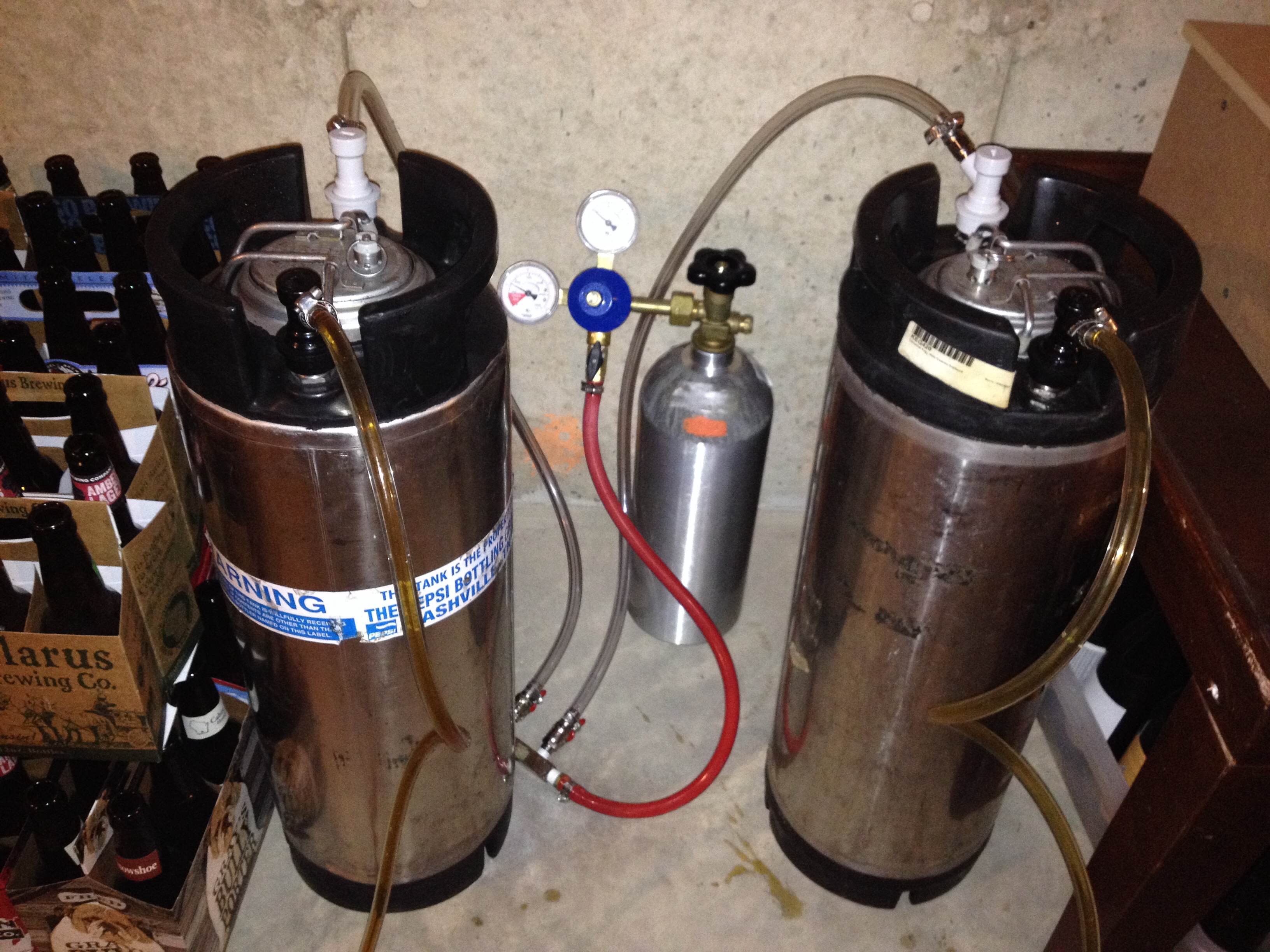
10 gallons of beer that I didn’t have to bottle!
I totally missed out on National Drink Beer Day yesterday. I’ll redeem myself by enjoying one of my two kegged beers shown in the picture. I’ll write about my first kegging experience tomorrow. (Spoiler: I never want to bottle again!)
But today is Monday, so it’s time to cover the Boards & Barley that I’ve enjoyed over the last week. With a Board Game Night and a date night with my wife where we played games I was able to get a nice assortment to the table. But let’s start with the Barley.
The Barley:
BARLEY SPOTLIGHT: New Glarus Staghorn
My friend Jeremy describes this as the best domestic Oktoberfest. I agree with him. This is a very excellent beer and I’ll often choose it over the German Oktoberfests. Is that beer heresy? Doesn’t matter to me. New Glarus has produced a truly fine Oktoberfest. Next time you’re in Wisconsin in September or October, make sure you try it!
- New Belgium Pumpkick
- Tyranena Painted Ladies
- Lake Louie 10-81
- Boddington’s (My British colleague gave this to me as a gift)
The Boards:
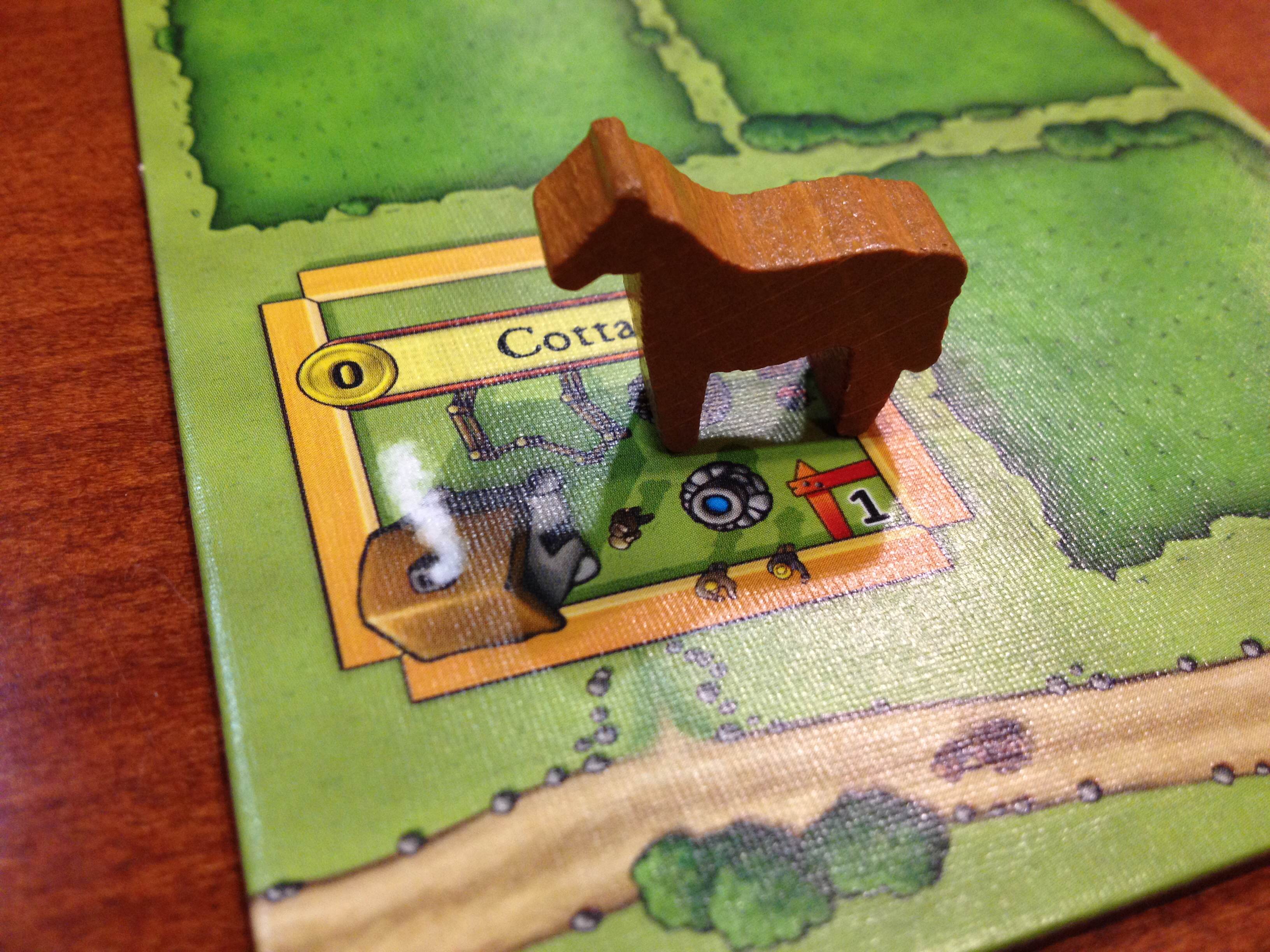
Don’t worry. He wasn’t lonely for long!
BOARDS SPOTLIGHT:
Agricola: All Creatures Big and Small
This game is my Spotlight game this week because I was able to get my wife to play it. She graciously learned a new game and when it was done said she’d play it again! That’s a big win for me. I’ve wanted her to learn Agricola for a while so introducing her to ACBAS seemed like a good intro. The gameplay feels roughly the same and the pasture/animal elements emulate those in the full game. So I think she got a feel for how Agricola would go. I’m excited about that.
Designer’s Corner:
This past week was a good one. I finished up prototype art (haven’t done that in a long time) and I got The Grand Illusion to the table for it’s first two playtests (It had been a long time since I put a new game design on the table).
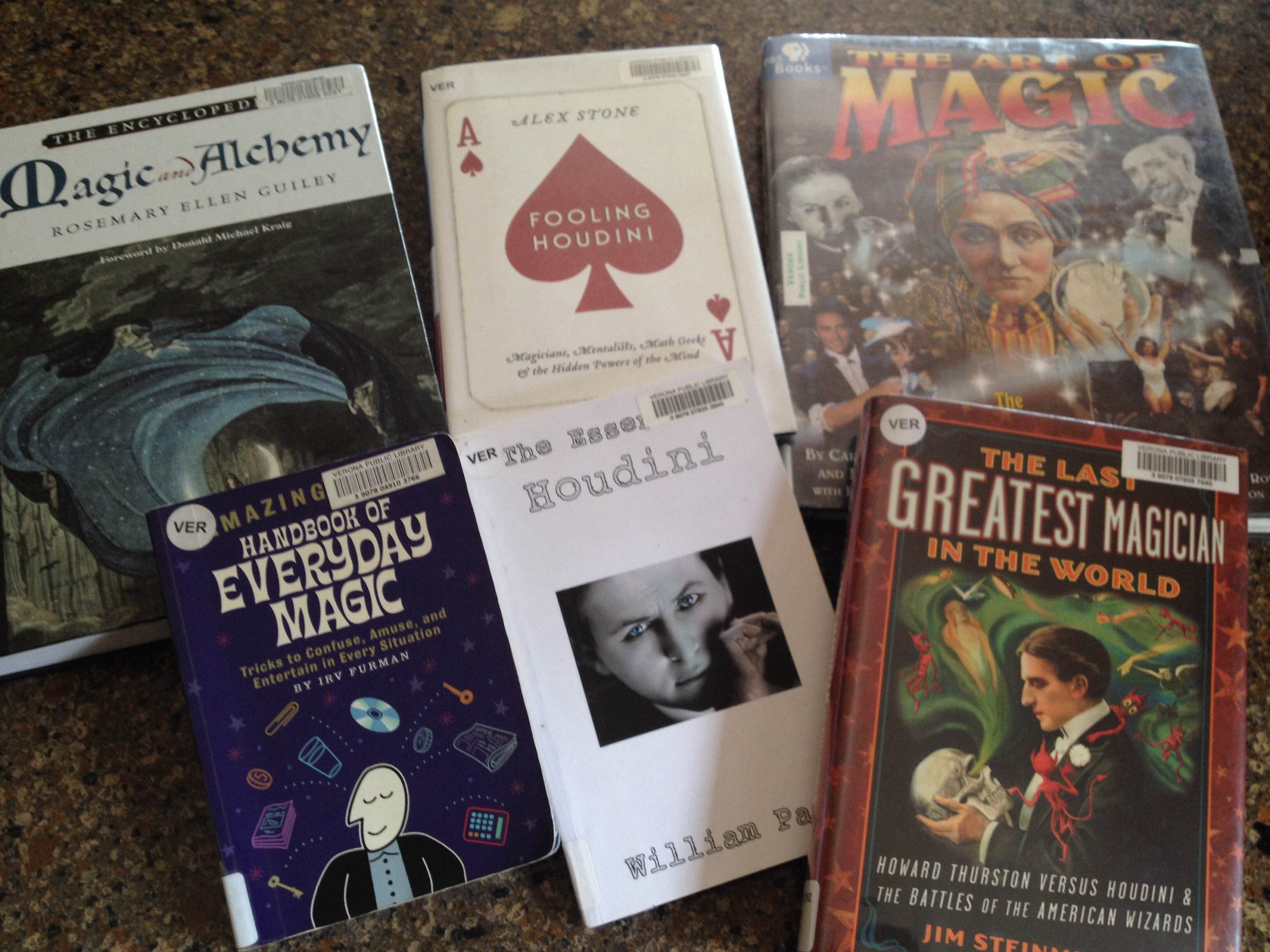
It’ll be magic if I can find time to read these.
Since the playtests were successful (I should write an article on what makes a playtest successful because I think that can mean a lot of different things) I thought I’d do a little more research into magic and the late 1800s-early 1900s magicians. I picked up a few books. I have no idea when/if I’ll have time to read them.
I think the playtests were successful for two main reasons:
- Both played to completion.
- It was fun (Or at least I had fun playing).
Playing to completion is a big metric for me. If you can design a game on paper or in your head and bring it to the table such that it can be played in full, that is a big accomplishment. Of course, that doesn’t matter as much if the game stinks.
So I had the two successful playtests and I’m ready to implement some good initial changes to things that were obviously not perfect. I think there are good things ahead for this game.
Monday Brews 9-22-14
Today is the last official day of summer. Bummer. Before we know it snow will be on the ground, the days will be short, and we’ll be freezing. Aye. What a horrible way to start a blog post. Sorry for that.
Let’s cheer you up by covering the Boards & Barley I’ve enjoyed over the past couple weeks!
The Barley:

Perfect amount of pumpkin and raven!
BARLEY SPOTLIGHT: New Belgium Pumpkick
So Autumnal. So delicious. It has a very nice level of pumpkin flavoring. Much more manageable than the Southern Tier Pumking and Warlock brews. This beer makes me think of Fall, and I like Fall quite a bit, so this is an enjoyable beer for me.
- Southern Tier Warlock
- Spaten Oktoberfest
- Milwaukee Brewing Sasquash
- Deschutes Black Butte
- Brau Brothers Moo Joos Oatmeal Milk Stout
- Ayinger Oktoberfest
The Boards:
 BOARDS SPOTLIGHT: Istanbul
This game has such a nice and simple mechanism of movement. It allows for great replayability. It adds interesting and tough decisions. And can allow you to mess with other players without it seeming like a “take-that” kind of game. I’m looking forward to playing this again.
Designer’s Corner:
 I have made a lot of progress with the prototype for The Grand Illusion. I’m on pace to have it playable for our group’s Board Game Night this week.
I’ve laid out the gameplay foundation, which is quite simple mechanically. I’ve tried to include a system that will provide for some good interaction. And I’m just ready to play it. It will probably be horrible, but at least the logo looks okay! Hopefully I’ll have a report on Playtest #1 later this week.
Grand Illusion Update

Today I wanted to report on the progress of The Grand Illusion. Normally I do that on Thursdays and I was planning on posting a game review today but I’m excited about the game so I figured I’d write about it.
What’s New?
I’ve begun prototyping! I have created a deck of skill cards. These cards represent the 9 types of magic in the game. The types of magic are in two separate tiers: basic and advanced. There are 6 basic types and 3 advanced types. Here is a picture showing the skill cards (thanks to The Game Crafter for blank cards – They have blank poker cards on sale right now for 1 cent each!).
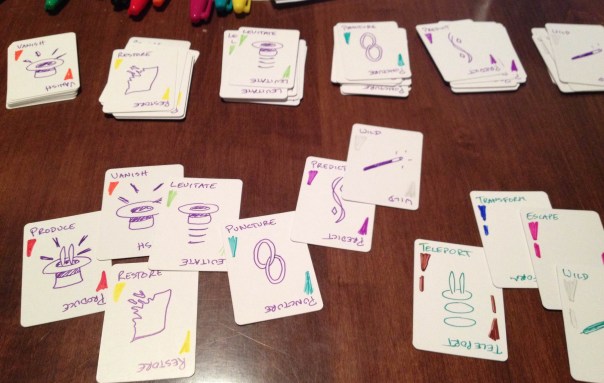
Collect these and use them to perform never-before-seen magic tricks to appease your growing audience!
Those are hand-drawn icons, people!
What’s Next?
The next step for the prototype is to create a deck of Trick cards. These are cards that represent magic tricks. During the game you’ll need to collect the skill cards shown above and then turn them in to complete the magic tricks.
Once you perform a magic trick you will earn the rewards and audience shown on the card.
So let’s discuss audience… Audience is actually a currency in the game. It is necessary to build an audience during the game or you will not meet the requirements on your Grand Illusion card. So each time you perform a trick, if successful, you will gain audience. In the game you will collect skill cards, spend them to perform tricks, gain audience and increase your skills to be able to perform better tricks.
There will definitely be some engine building in the game. The goal of this design is to be an entry-level game with an easy rule set that is quick to teach and play. The main mechanics are set collection and engine building.
Engine Building
Engine building in games refers to the idea of obtaining some ability or benefit that let’s you do things a little better, then getting another one that builds on the previous ability or benefit.
In The Grand Illusion the engine is represented by the skills each magician will gain. Will you become a master of vanishing acts? Perhaps you’ll be the best at restoration magic? Ultimately you’ll have to get proficient at at least two basic types of magic and one advanced magic.
The question I’m currently struggling with is how exactly to create the engine building element. I have two options I’m considering:
1) Splendor-Like
In the game Splendor players turn in poker chips to grab a card from the table. Once they grab that card it usually acts as a poker chip. So for future card grabs they need one less poker chip. This would work perfectly for The Grand Illusion but I don’t want to copycat an existing game.
2) Tech Tree
A tech tree is something where you must complete “Level 1” stuff before you can work on “Level 2.” So in The Grand Illusion I could have a tech tree (pyramid) of trick cards on the table. When a player would perform a trick they would place a token of their player color on the trick to show they’ve completed it. This would also direct their play as there would be advantages and disadvantages for breadth versus depth.
I think that once I create the Trick deck I’ll try out both of these options. The Splendor-like version may work better, but I’m more drawn to the Tech Tree version since it is more original.
My goal is to prototype the skills deck this weekend and aim for the first playtest next week! Thanks for reading. I’d love to hear your thoughts about the different engine building options.
 Boards and Barley