Blog Archives
Character Meeples by Meeple Source

I don’t really ever upgrade my games by adding cooler components or by painting minis or anything like that. But every once in a while there is a product that can add enough to the game to make it worth it. Today I want to introduce you to Meeple Source.
I wrote about Meeple Source in my Sourcing Game Components: Meeples article last September. They make fantastic custom meeples with a ton of character. Today I am mentioning them because they have a campaign currently running on Kickstarter (KS Link). I have personally met the fine folks behind Meeple Source and they are great people with a great product.
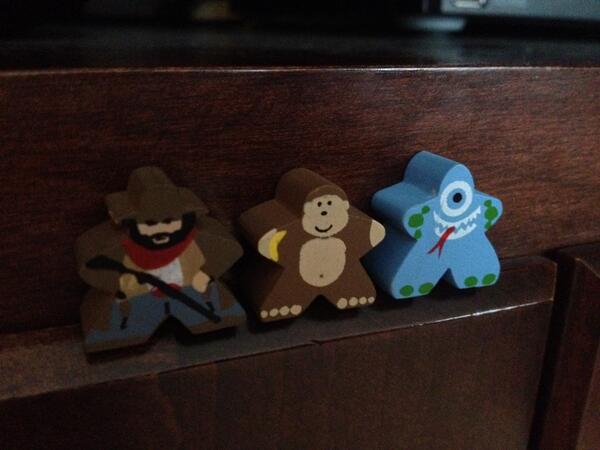
They just look so awesome!
I brought back a few of the character meeples from BGG.Con and my kids (ages 4 and 2) loved them. I wish I had bought more of them for my kids, and for my own games and game designs.
The campaign they are running has ten days remaining. They are over $70,000 and they have more stretch goals to go.
So far they have added some awesome stuff to the campaign. They added custom character meeples for a few games, like Tiny Epic Kingdoms, Lords of Waterdeep and Pandemic. They have three custom meeples from other companies like Miniature Market, Board Game Geek, and Tasty Minstrel Games. These are free to people who pledge $9 or more. They have also added cool viruses, germs, or plagues for Pandemic.
Here are just a few of the MANY meeples you can get:
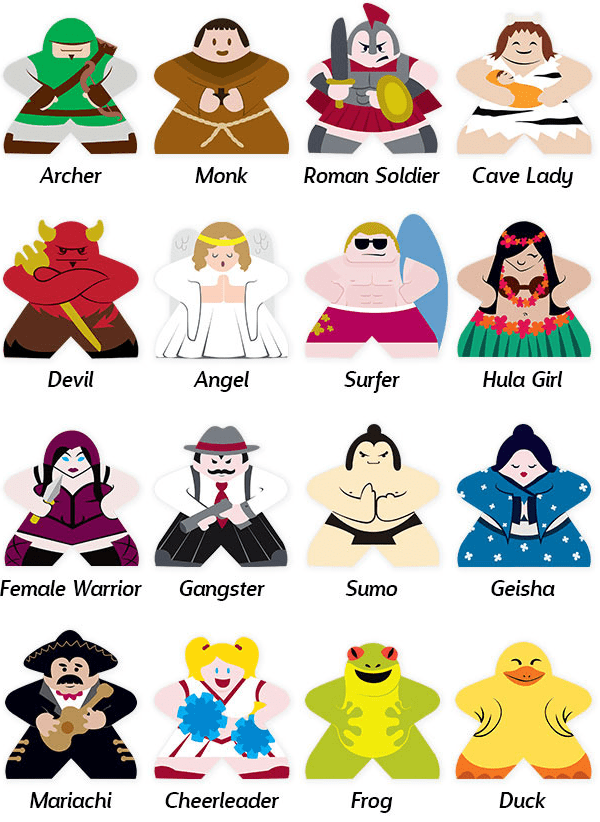
I won’t get into the pledge tiers for the campaign because there are a ton of them. But go check it out and choose some sweet character meeples for yourself, or your kids, or your parents, or to hide in your co-workers office. I’m backing to get a fresh set of 10 different meeples, but since they keep adding awesome content I have no idea which 10 I’ll choose in the end.

Monday Brews: 3-3-14
It’s awesome that March is here! It’s not awesome that it was -7 degrees this morning. Anyone else ready for warmer weather?
It’s Monday, which means it’s time to recap the Boards & Barley that I enjoyed last week. Let’s start with the Barley…
The Barley:
 BARLEY SPOTLIGHT: Breckenridge Vanilla Porter
The Vanilla Porter from Breckenridge Brewery is my favorite vanilla beer. It has a great smooth and subtle vanilla flavor that adds a great layer of sweetness to the porter. I like to drink it as a slightly warmer temperature to help bring out even more vanilla. This is a highly enjoyable brew that I plan to enjoy again sometime before Winter is over.
- NEW! New Glarus 20th Anniversary Strong Ale: I enjoyed this with my friend Jeremy while watching the third and final episode from this season of Sherlock. It was a perfect accompaniment to the show!
- Potosi Belgian Abbey
- NEW! Shipyard Longfellow Winter Ale: I thought this was a pretty good winter beer. I would drink it again. But perhaps that’s because I love their logo.
- Wisconsin Brewing Amber Lager
THE BOARDS:
BOARDS SPOTLIGHT: Crokinole
My friend Jeremy, the same one mentioned above, made his own Crokinole board. (I am hoping to have him write a guest post about his process). He finished up his “test board” the other night and so we played it a bunch during our board game night. It’s just a lot of fun to play, especially when you can make a board rather than paying over $100 for one!
- NEW! Il Vecchio: My friend Adam got this one to the table. It felt and looked and played very Euro-y, which is good for our group. Most of the time I didn’t have a good idea of why I was doing anything. I think the other guys felt that way early on as well. I snagged a 10 and 8 point location in one of the provinces and that helped propel me to victory in a tight game. We were all separated by 10 points total. It was one of those games where I wanted to play again right away so that I could do things a lot better.
Designer’s Corner:
I have been working on Brooklyn Bridge for some time now and it is like a big puzzle. There are some gameplay elements that are currently not fitting together. So I am toying with a few ideas to get them to work while not sacrificing fun or theme. I am still hoping to have this ready for Protospiel-Milwaukee later this month.
My current objective with the design is to put together a prototype and start solo playtesting it. That should help me find out how the gameplay elements will really fit together. I think I can put together a board and an objectives deck tonight. I may have to have an impromptu game night at some point this week to get my Level 1 playtesters to try it out.

So those are the Boards & Barley I enjoyed last week. What beer and board games did you enjoy?
How to Teach Games

Teaching games is like an upside down pyramid. Photo Credit: ©hassansagheer via DeviantArt, Inverse Pyramid, Louvre Museum. I do not own this material.
I’ve had several friends tell me that I am good at teaching games. So I sat down for a while with a nice brew and thought about why they might have said that, and about what makes someone good at teaching games. So I’ve postulated and hypothesized some ideas that I want to lay out for you today.
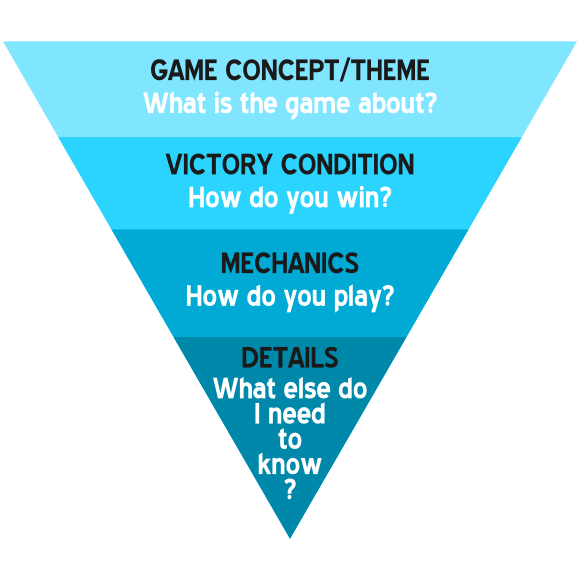
There are some rules and some guidelines. But the overall idea of how to teach games can be summarized in this upside down pyramid table with the idea being that you teach from the top down:
 Before we get into those concepts I want to address Rule #1 of teaching games…
RULE #1: Know How To Play!
That seems pretty straightforward, right? It is really annoying when someone is all excited to teach you a game and then they keep looking through the rules for all the weird little oddities. Don’t be that person.
Learn the game. Read the rules. Watch videos about how to play the game. Set the game up. Pretend to play it solo. Do whatever you need to do to know the game before you attempt to teach it to others. Don’t waste their time.
Ok… glad I got that off my chest. Now let’s hop on top of that inverted pyramid!
1) Explain the GAME CONCEPT/THEME
I always like to start at the beginning. Tell the players what the game is about. Tell them about the theme. Tell them the overall idea of the game. Players will want to know what is exciting about the game. They will want to somehow relate to the theme, if at all possible. At a bare minimum, players will want to understand what the theme is so that they can try to immerse themselves in it.
Games are supposed to be fun and it is often more fun if you can immerse yourself in the theme*.
* Does not apply to abstract games.
2) Explain the VICTORY CONDITION
Now that your players know what the game is about, they’ll want to know how to win or at least how/when the game ends.
I think this is very important to know early on. I dislike when someone is teaching a game and they have told you about 30 different rules and then someone says, “How do you win?” That’s annoying.
So after I explain what the game is about, I tell them how they win the game.
3) Explain the MECHANICS
Players should now know the victory conditions. It is now time to explain how they can reach those victory conditions.
At this point you will teach the mechanics of the game. You will be teaching the actual things that you will be doing during the game. This is the most time-intensive portion of teaching a game. Also, there are a few guidelines during this portion of teaching that I like to follow:
- Teach along the flow of the game
- Teach the basics of each portion of the game… save the details for later.
- As you teach, remind the players how the mechanics relate to the victory condition.
- Give examples of how one decision can help you make the next.
Teaching along the flow of the game means don’t skip around. If the game follows a progression of things, teach them in order.
Teaching the basics means telling players the overall idea of what is happening. The details can come later on.
Remember to relate the different phases of the game to the victory conditions whenever possible. That way players can quickly learn which mechanics are the most helpful along their path to victory.
And giving examples of how decisions affect future decisions can be really helpful.
4) Explain the “necessary” DETAILS
Once you have taught the basics of the mechanics, go back and fill in the details. Once players know the overall flow of the game, then revisit each of the portions of the game and dive deep enough where people aren’t lacking anything that they will need to know.
These are the sorts of things players will need to know, but don’t need to know until after they have learned the general flow of the game.
Got all that? Here’s an example…
 I’ll attempt to “teach” you how to play Compounded from designer Darrell Louder and publisher Dice Hate Me Games. I love this game and it is a great example for this article. If you haven’t played it, I highly recommend it. Let’s start with step 1) Concept/Theme.
1) CONCEPT/THEME: You are a lab manager working on the greatest compounds known to man. Your objective in the game is to manage your lab workbench better than your opponents. To do that you will have to complete compounds, increase your experiment levels, and gain the most atomic points.
It’s that easy and quick. Give the players the basic idea of why they are playing the game, and what their overall objective is while playing.
2) VICTORY CONDITION: To win the game you will have to score the most Atomic Points. To earn Atomic Points you will have to complete compounds. To complete compounds you will have to place elements on these cards (*points to cards). Once you have completed a compound you will earn points and bonuses, which I’ll explain in a moment. The game ends when someone reaches 50 Atomic Points (or condition A, or condition B, etc.).
Okay, in that portion I started from the top and worked my way down. Score Points. How? Complete Compounds. How? Place elements on compounds. Start at the top and then fill in the details. It allows players to understand the grand scheme of things.
3) MECHANICS: Now that you know how to earn points, let’s discuss how we actually play. Each round is made up of a few different phases. (*points to top of player mats where the phases are listed). First is the Discovery phase where we will draw elements from the bag and possibly trade with other players. After Discovery is the Study phase where we will claim compounds by placing our discs on them. After the Study phase is the Research phase where we can place elements on compounds and try to complete them. After the Research phase comes the Lab Managing phase where we check for completed compounds and restock the lab with new compounds.
So when I teach Compounded I like to run quickly through the four phases of a round before I give too much detail about any one of them. This way players will become familiar that each round of the game has four phases where you are doing certain things. Once players understand the flow of the game, then I get into the details.
3) DETAILS: Those are the different phases. Let’s discuss each one. So in the Discovery phase players will draw a number of elements shown by their DISCOVERY research level. Each player starts the game at “2.” Also during the discovery phase players will have the opportunity to trade things. You can trade anything EXCEPT Atomic Points and research levels. No future trades are necessarily binding. That depends on your real life integrity. Then in the Study phase you each have one disc to place on a compound. …
I could go on and on, but the idea here is that for each phase of a game you should be mentioning the details. Like during the explanation of the Lab Managing phase of Compounded you should point out the little symbols on the corners of the cards that either give you a bonus or start a lab fire or whatever they may be. Players will want to know those things.
So that’s the basic way that I teach a game of Compounded to new players. I follow the four major steps shown in the inverted pyramid.
I want to point out that Dice Hate Me did an awesome thing by listing the phases of the round right on each player mat. Here is a picture showing how Dice Hate Me incorporated my Steps 3 & 4 onto the player mat to help players learn and play the game:

Having the overview of the game flow and the details where all players can see it serves as a constant reminder throughout the game. It also helps to prevent players from asking the same questions over and over again.
I know that not everyone will agree with how I think games should be taught. If you don’t agree, let me know about your way. I’d love to hear how others teach games. If you have a way that works really well, post it in the comments! Thanks for reading!
Monday Brews 2-24-14
Wow! The Kickstarter campaign is over and I can get back to life as normal. I may write an article about it in the next few days, but today we have the standard Monday Brews for you.
So let’s check out the Boards & Barley I enjoyed in the last week…
The Barley:
 BARLEY SPOTLIGHT: Cave Creek Chili Beer
In order to celebrate the completion of the Scoville Kickstarter campaign I thought it would be fun to try a chili beer. There is a local store where I had seen one before so I stopped there on Friday. Thankfully they had one left. So at midnight when the campaign ended a few friends shared the bottle with me and we all sampled the chili beer. Here’s my review: yuck!
But at least we celebrated with an appropriate beer! Here are the other Barleys I enjoyed:
- New Glarus Cabin Fever Honey Bock
- New Glarus Coffee Stout
- Lakefront Brewery Eastside Bavarian Dark Lager
- NEW! Vintage Dedication: This is one of the best Dubbels I have had. It had a perfectly Belgian character and I would definitely drink it again.
- NEW! Vintage McLovin: If the Dubbel hadn’t been so strong I probably would have enjoyed this Red Ale a little more. It was still a good beer though.
The Boards:
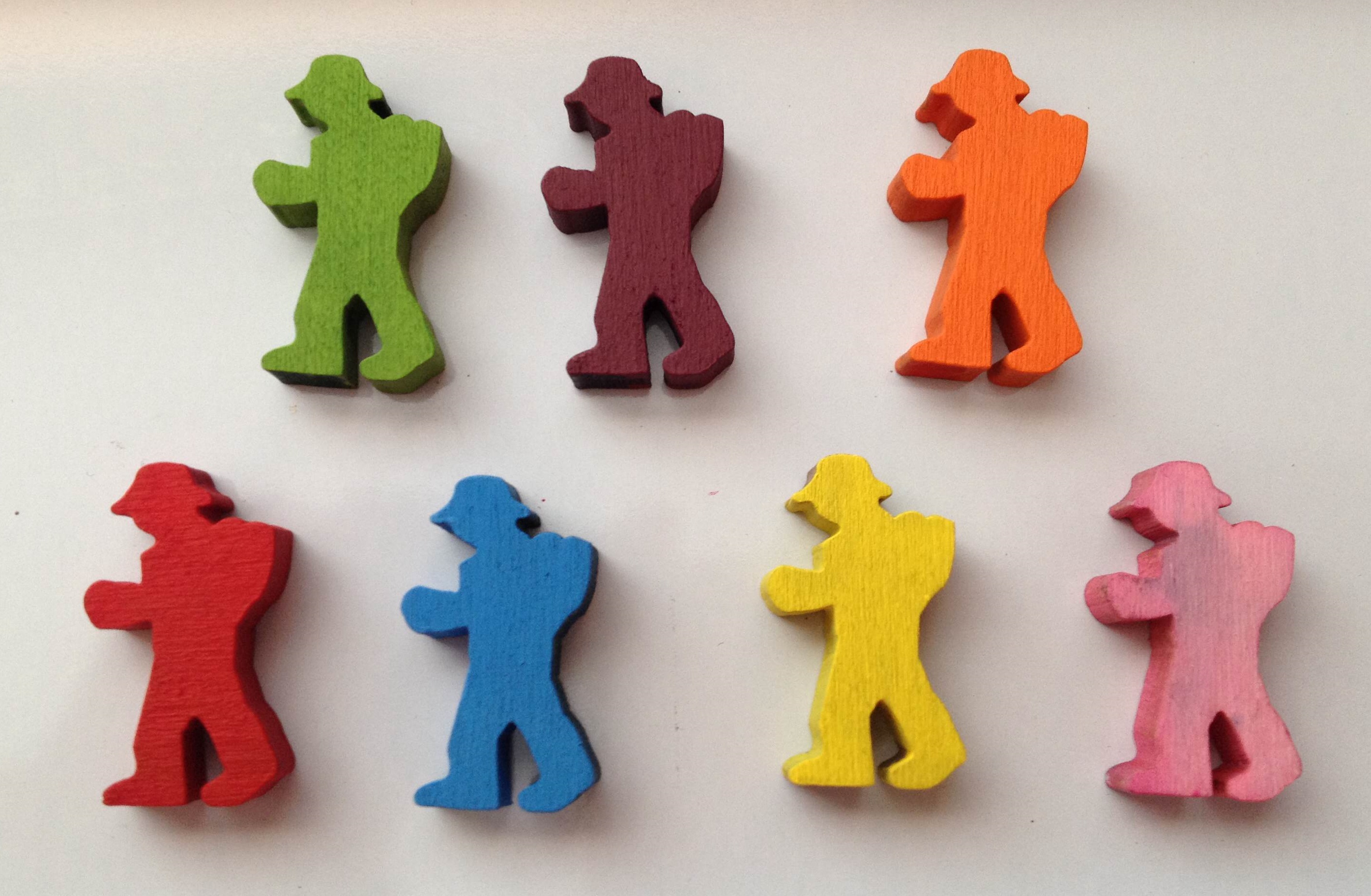
Scoville Farmer Meeple Awesomeness! Pink not included.
BOARDS SPOTLIGHT: Scoville (Again!)
After the campaign ended at midnight three of us played a game of Scoville. I struggled and fought all game long and didn’t seem to be doing too well. But in the end I did just well enough to win by 1 point!
It was a light gaming week. But those are four enjoyable games!
Designer’s Corner:
It’s time to put Brooklyn Bridge together. That’s all. I’ll let you know how that comes along.
***
So those are the Boards & Barley I enjoyed in the last week. What did you enjoy???
Monday Brews 2-17-14
Hi everyone! Thanks for visiting. Before we get to the Monday Brews I wanted to take this opportunity to once again point out that Scoville is on Kickstarter. The campaign ends on Friday and is flying it’s way to the last stretch goal. At $80,000 Tasty Minstrel Games will put pepper shaped components into the game instead of cube-based components. Here’s an example of how much more awesome things will look when we hit that goal with your help:

Wow! Those peppers really spice up the art!
So go check out my game on Kickstarter! Thanks!
Okay. Now to the Monday Brews. I realized that I was getting a little monotonous with my descriptions of beers that I’ve had numerous times. So I’m changing up the way I do the Monday Brews articles a little bit. Instead of writing out a little blurb for each beer and each game I’m going to feature one of each and simply list the rest unless it was new to me, in which case I’ll write a little one-liner type thing. This saves all of us time since you don’t have to read the same boring descriptions each week and I don’t have to type them.
So let’s check out the Boards & Barley that I enjoyed this past week…
The Barley:

I thought it was a weird spelling of “Sudoku” at first.
BARLEY SPOTLIGHT: Toppling Goliath Pseudo Sue Pale Ale
I’ve found I am starting to enjoy Pale Ale’s more and more recently. Typically they are where I draw the line for hops in my beers. This one was fairly hoppy, coming in at 50 IBUs. Fortunately it didn’t have a lingering bitter aftertaste that is common among IPAs and more potent Pale Ales. So I enjoyed this one.
- Fleming’s Scotch Ale (My Homebrew)
- NEW! Green Flash Saison Diego – When I cracked this one it foamed over for about 10 minutes and left a little mess on the counter.
- NEW! New Glarus Spiced Ale – This was a decent spiced ale that wasn’t overly spiced.
- New Glarus Cabin Fever Honey Bock
- NEW! Big Wood Jackpine Savage – This was borderline too hoppy for me, but came in a pretty cool can.
The Boards:
BOARDS SPOTLIGHT: Scoville
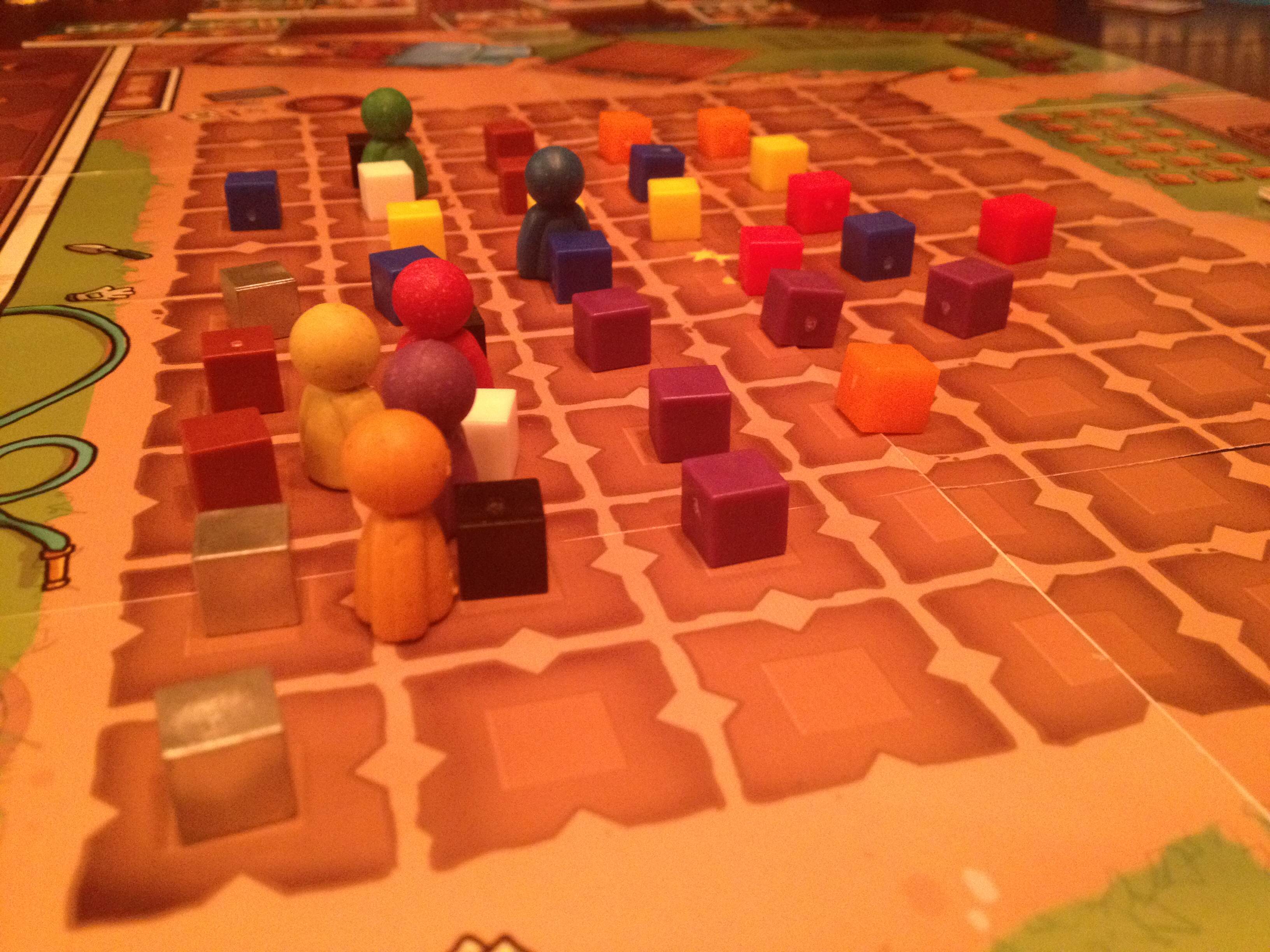
A near-endgame field condition from a recent 6 player game of Scoville. (Prototype copy)
I was honored at a recent game night when people requested to play Scoville. I had my copy along to show some people the awesome artwork, but I wasn’t expecting to play it. But we got in a tight 6 player game. I was able to pull out the victory with a big final move to get a 24 point recipe.
My favorite thing about Scoville is how the map (planting/harvesting) mechanic works. There are so many interesting decisions of which pepper to plant, where to plant it, and which direction to move your meeple when harvesting. I can’t wait to play it again!
If anyone has any questions about Scoville, please let me know by posting a comment at the bottom of this blog post. Thanks so much!
And here are the other games I played this past week, including two new games.
- NEW! Eight Minute Empire Legends – This was an interesting game in that it plays quickly and there is a fair amount of strategy, but it definitely takes more than 8 minutes.
- Skyline
- Compounded
- NEW! Karesansui – I think this game has a bunch of potential as an auction game. Unfortunately I was terrible at it.
- 7 Wonders
- Long Shot
Designer’s Corner:
As you can imagine I’ve been spending quite a bit of my time focused on the Scoville Kickstarter campaign. That means I haven’t really been doing too much with my current game designs. This was an interesting game in that it plays quickly and there is a fair amount of strategy, but it definitely takes more than 8 minutes.
The one game I have been doing some work on is Brooklyn Bridge. One thing that was pointed out to me was that the worker placement locations will have to change based on player number. It seems like such an obvious thing when I think about the design, but it was something that I just hadn’t thought of. So I can use that information to start to put together a prototype where it will work with anywhere from 2-5 players. That’s what is currently in my design queue.
***
So those are the Boards & Barley that I’ve been enjoying. What have you been enjoying?
 Boards and Barley