Blog Archives
Design Update 12-5-13
Every once in a while I like to step back and take a look at what I’ve been working on. Last night I was putting together some components with “final” artwork so I can make a gameplay video for Scoville and I realized that it had been a while since I made any prototypes. And that got me thinking I should step back and take a look at what I’ve been working on. Let’s start with the hottest Euro farming game ever…
Scoville
This game is currently preparing to launch on Kickstarter. That means that art is being worked on with a feverish pace. I’m not really an artist, at least in these terms, so I can’t say how much work actually goes into it, but it seems to be a lot. There are so many different components that require artwork (orders, recipes, boards, player shields, bonus abilities, bonus point tiles, box, rulebook). Each of these is no less important than any others.
My work on Scoville has been pretty minimal. I am, however, hoping to receive more final artwork so that I can put together a prototype copy with that artwork and make a gameplay video for the Kickstarter campaign. When I receive more artwork I’ll see if I can give you all a little teaser or two!
Brooklyn Bridge
I worked on this game one morning at BGG.con and made some awesome progress. I suppose it wasn’t progress as much as it was a breakthrough in the design. The game had previously been dry and lacking important decisions.
Brooklyn Bridge is a worker placement game where you send out your crew to obtain materials and build the bridge. You can also hire more crew. So far everything I’ve mentioned sounds like a re-theme of Stone Age. While elements of Stone Age are present in the design, the hook is that players not only place workers in a turn by turn order, they also remove workers and perform the actions in a turn by turn order. This adds a time dependence of when you activate workers each round. This is where the design differs greatly from Stone Age.
The breakthrough that I had at BGG.con was to incorporate public goals in the game, not dissimilar to the orders and recipes in Scoville. These goals would be for building different parts of the bridge. Pieces of the bridge should be built in a certain order and players earn bonuses for building them correctly. While Stone Age has it’s endgame scoring based on your game status (food track, # in tribe, etc.) Brooklyn Bridge scoring is based on how much your crew contributed to the bridge. I am plowing forward on this game and my goal is to have a playable prototype in January.
Dice Hate Me 54 Card Challenge
I am pretty excited for this contest. I know the awesome people from Dice Hate Me and it would be an honor to win this contest and get to work with them. For information on the contest itself go here.
Here’s the issue I have… knowing them they are seeking something that is awesome and has a unique and flavorful theme. I unfortunately currently have neither. I guess I had better start cooking something up!
Quantum Orcas
A while back I mentioned that I would be putting this on The Game Crafter once I was happy with it. Unfortunately between BGG.con, Thanksgiving, and now the 54 card challenge I have not had time to work on this most awesome of games.
On the upside I have a plan for how to make the game better. Since the time after Christmas is usually a down time for a lot of things I should have time to finalize what I want the game to be. Then after I’ve played it at least 40-ish times I might feel comfortable posting it for sale on TGC. So those of you who love time traveling killer whales shouldn’t have too much longer to wait!
Conclave
Ah, Conclave… what to do about you. We’ve had a love/hate relationship so far and I imagine that will only continue.
So Conclave is my game design about getting yourself elected as the next pope. The game includes manipulation of the Cardinals by persuading and influencing their votes. The problem with the game is that it is only pseudo-fun for one round and the game lasts 4 rounds or more.
I have a solution that could make the game fun and more interactive without adding any length to the game but I have been avoiding it. If I sat down for a day or two and worked away on Conclave I think I could have something enjoyable. I’m hoping to get to this during the long hours of nighttime in January and February.
***
That’s where I stand from a game design perspective. It’s always been fun for me to work on this stuff and I appreciate you reading about my design efforts. I hope to report back by the end of January with some awesome updates!
Designer Doldrums – And how to get out!

What do you do when the wind stops blowing?
It’s usually this time of the year that I don’t put much effort into game design. Between Halloween, Thanksgiving, and Christmas each about a month apart there’s always something to be looking forward to during these months. And that also typically means I travel more than normal to make sure I visit family.
So I find myself in the designer doldrums. A place no designer wants to be, yet I’m guessing we all find our way here at one point or another. My visit to the doldrums is aided by the upcoming Kickstarter campaign for Scoville. There’s been a lot going on behind the scenes and it has captured my attention like going on a first date. Never-the-less, I am adrift in the game design ocean and the wind has stopped blowing.
Today’s self-help article is all about how to get inspired and out of the doldrums. I am presenting 5 ways to get back in the game. So when you find yourself without inspiration or desire to design, try out these five things:
Play New Games
This one is a fairly obvious option. By playing games that are new to you you can get inside the mind of other designers. New games often have new quirks to mechanics that you may not have seen before. Those quirks might inspire you to try out a new mechanic of your own.
Read a Book
Often when you enter into someone’s creative world you can pick up little things that might inspire you. By reading a book you may find that you love the story and could be inspired to design a game that fits the theme. The other benefit of reading a book is that you get whisked away from everything else on your mind. You can get lost in the world inside the story. It’s often these moments of escape where you brain gets inspired!
Watch a Documentary
For inspiration I prefer documentaries over normal movies. Documentaries often share the nitty gritty of some topic that you otherwise might not find interesting. And often it is the nitty gritty that can give you inspiration. My first hand example is with my design for Brooklyn Bridge. I was watching a BBC documentary about it and the whole idea of sending workers into a caisson while risking caisson’s disease was really inspiring. It seemed to be something that could be a fun game mechanic. So find an interesting documentary and see if it reveals any interesting game mechanics!
Visit a National Park
One of my favorite ways to get inspired is to simply get outdoors. Despite the cold weather moving in, if you can get to a park and let your mind relax and forget about all the other stuff that makes your life busy, then you might be able to get inspired. While nature itself isn’t necessarily the thing that I look to for game mechanics, it is the place I can go to do some clear thinking about game mechanics. Plus, who doesn’t like to smell the fresh air and get away from things for a while?
Clean Your Workspace
This last one isn’t nearly as fun as the first four, but I find it can be just as inspiring. My workbench and design area often fills up with clutter, game components, tools, and more. The result is that it becomes a non-useable space. The clutter ends up hindering my design abilities. So every once in a while I like to spend an afternoon and completely overhaul the space and get it cleaned up. Once that workspace is pristine I find that I can sit there and really think about game design. If your workspace is cluttered, then perhaps your brain is cluttered too. Clean up your desk and your mind will be able to work better.
***
Those are some of the ways that I like to break out of the designer doldrums. Where do you turn for inspiration and ambition?

Monday Brews: 11-4-13
Well, Halloween is over and it’s now November. The leaves are just about all off the trees in my neighborhood. With the time change it’s dark when I get home from work. So you know what that means? It means that we might as well settle inside and play more board games! (and maybe enjoy some nice cold-weather brews!)
So here are the Boards and Barley that I enjoyed in the past week…
The Barley:
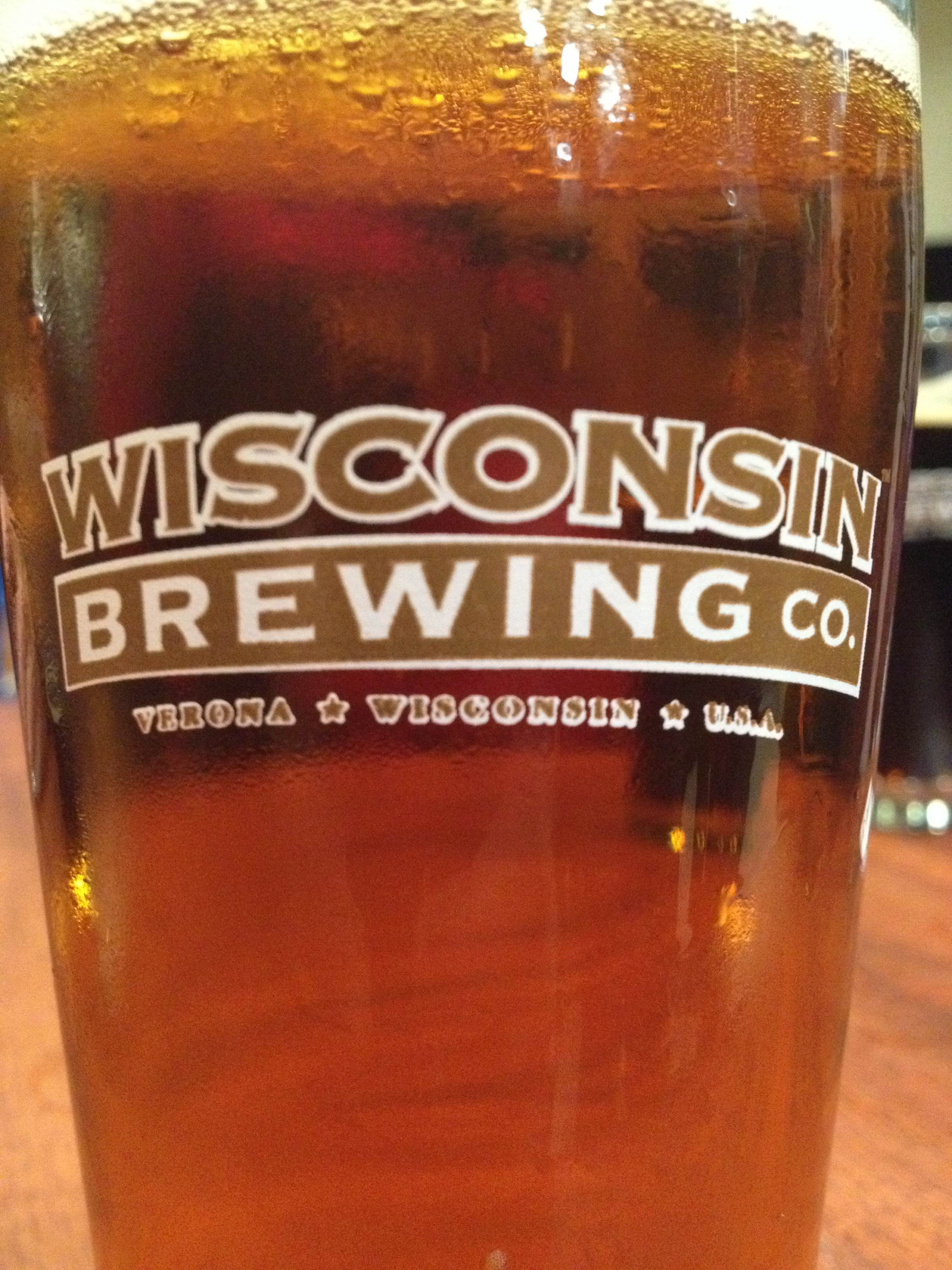
A new brewery in my hood!
Belhaven Scottish Ale: A delicious, smooth, enjoyable ale. If you’ve never had one, try it this week!
Tyranena Painted Ladies: At game night I grabbed one of these since the pumpkin ale season is ending and I figured I better enjoy one while I could. It’s nice that it’s not overly pumpkin flavored.
Newton’s Oatmeal Stout: I enjoyed more of my own homebrew. I think it’s pretty good. While it won’t win any awards, it’s definitely an enjoyable brew.
Wisconsin Brewing Amber Ale: I visited this brand new brewery on their Opening Day last Friday. This is a new brewery pretty close to where I live and my visit last Friday will certainly not be my last to the brewery. It’s not every day that a new craft brewery opens so close. I enjoyed the Amber Ale, but they also offered an American IPA, a Session IPA, and a Brown Porter.
Sierra Nevada Narwhal Imperial Stout: Potent. But not more potent than a typical Imperial beer. This was pretty good, but I’m glad I only had half a bottle.
Tyranena Sheep Shagger Scotch Ale: On Saturday I participated in a beer run at a brewery. I ran the 1/6th Barrel distance (4.37 miles) with a bunch of my friends. This is a fantastic event that sells out every year. With the entry you also get a great meal of lasagna, salad, and breadsticks. And you also get two beer tickets. I chose the Sheep Shagger because I love scotch ales and I can’t find this one in stores.
Tyranena Three Blondes Honey Ale: For my second beer ticket I chose the Three Blondes since I needed something lighter. However, I wish I had chosen the Imperial Coffee Porter since it was delicious (I got a sample).
Overall it was a pretty good beer week!
The Boards:
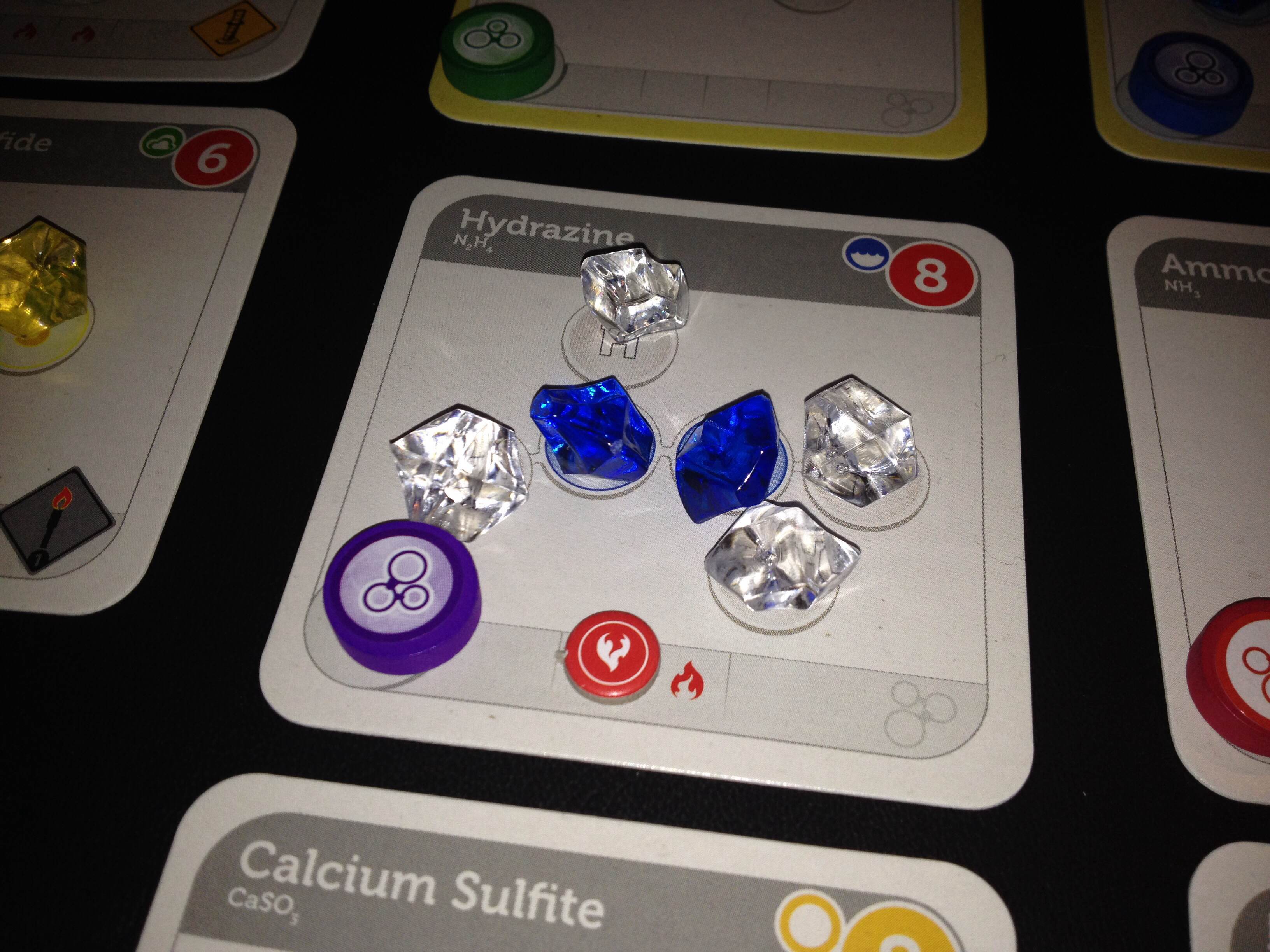
To Bunsen Burn or not to Bunsen Burn… that is the question.
Compounded (x2): This recent Kickstarter arrival is a fantastic game. I have played it twice (once 4p, once 2p). The game itself is a compound composed of elements of science, fun, and awesomeness!
Star Wars X-Wing Miniatures: I got to play X-Wing for the third time. The third time went about the same as the first two. In each of those I had incredible dice results. In this case I finished off the game by rolling 6 hits from my last 7 dice. Beware if we ever match up on the X-Wing field!
Carcassonne: While I was at the Tyranena Beer Run waiting for the race to begin we got a 6p game of Carcassonne on the table. I must have been distracted because I played a pretty terrible game. I tied for 4th place, but only three points ahead of last.
Dungeon Roll: I played a couple games of Dungeon Roll with my kids this weekend. They are 4yo and 2yo. They absolutely love rolling the dice and grabbing the treasure tokens. My son chooses the treasures based on the color, which normally means he grabs blue ones. It’s a fun game and a great way to get my kids interested in gaming! Side note: Tasty Minstrel just launched a 14-day Kickstarter campaign for a Holiday promo pack for the game. You can check it out here: Dungeon Roll Winter Promo Pack.
Designer’s Corner: (Scoville Update)

Coming (very) soon to Kickstarter!
I did not do any game design this week. I’ve simply been getting more and more excited about the Scoville Kickstarter project coming up in the next few weeks. While I don’t have a solid date for the KS campaign it is sounding like it will be up during BGG.con.
Speaking of BGG.con, I will be there demoing Scoville. If you haven’t played it, Tweet at me and stop by for a demo. I’m super excited to introduce it to more people. I’m also super excited that artwork is being done in advance of the KS campaign. In case you don’t subscribe to Tasty Minstrel‘s newsletter (you should!) then you probably missed the announcement that Joshua Cappel is on board to do the artwork. If you are not familiar with his artwork, take a look at Belfort since it is simply amazing!
As more information about Scoville becomes available I will keep you posted.
Design Me: Action Point Allowance
It’s been a couple of weeks off on Friday’s for me, meaning I haven’t posted a review or Design Me article since life gets in the way sometimes. But I’m back! And today we’ve got an interesting Design Me Challenge. Here’s the result that I liked best from Boardgamizer:
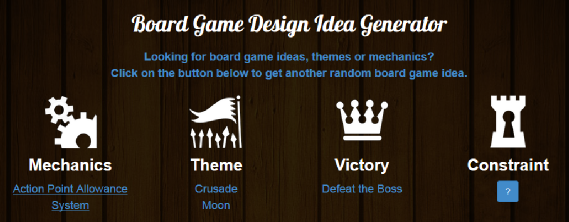
Action Point Allowance to crusade the moon and beat a bad guy! I can do this!
Moon Rattler
In the game Moon Rattler you are in command of one of several military space fleets sent from Earth to destroy the moon. Little did we humans know that the moon is actually a giant rattlesnake. It has laid some eggs and it’s getting really feisty. We humans need to prevent those babies from hatching. It’s time to save the world!
Moon Rattler is an action point allowance game where players are moving around a rondel throughout the game trying to defeat the moon rattler. The player who accumulates the most points during the game will be the winner. Points are obtained by contributing to the destruction of the moon rattler, which can be accomplished in several ways, shown here:
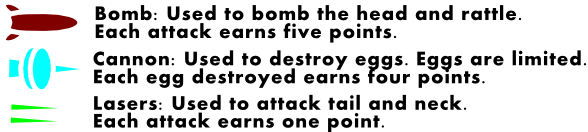 But these weapons cannot be used freely. Each player will have to charge their weapons or obtain bombs using their action points. Let’s dig in a little deeper.
Components
- Main board
- 6 Space ship meeples
- 6 player mats
- Numerous cubes in each player’s color
- Point tokens
- 18 Wooden egg tokens (3 per player per game)
- Health cubes
How To Play
Players will be flying their ship around the circle in clockwise fashion. At each location they will have 4 action points to use. In any turn the player may save two of their unused points for a later turn of their choosing. So on any given turn a player will have 4-6 action points available.
At each location the player may charge or obtain the item listed. This means that if they spend action points, then they would place a cube onto their player mat in the appropriate location. Charging their weapons or clock or obtaining a bomb require different amounts of action points. Here’s a tentative list:
- CHARGE LASER: 1 AP = 1 cube
- CHARGE CANNON: 2 AP = 1 cube
- CHARGE BOMB: 3 AP = 1 cube
- CHARGE CLOAK = 2 AP = 1 cube
Here is a look at the player mats, showing the maximum goods a ship can possess:
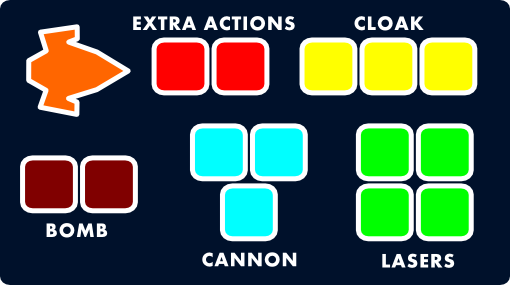
Moon Rattler player mat for orange player
Therefore a ship can hold 2 bombs, a charge of 3 for their cannon, a charge of 3 for their cloak, and a charge of 4 for their lasers.
Here’s the catch: Players have to balance obtaining/charging weapons with moving and actually using those weapons. Let’s take a look at the board so you have an idea of what’s going on here:
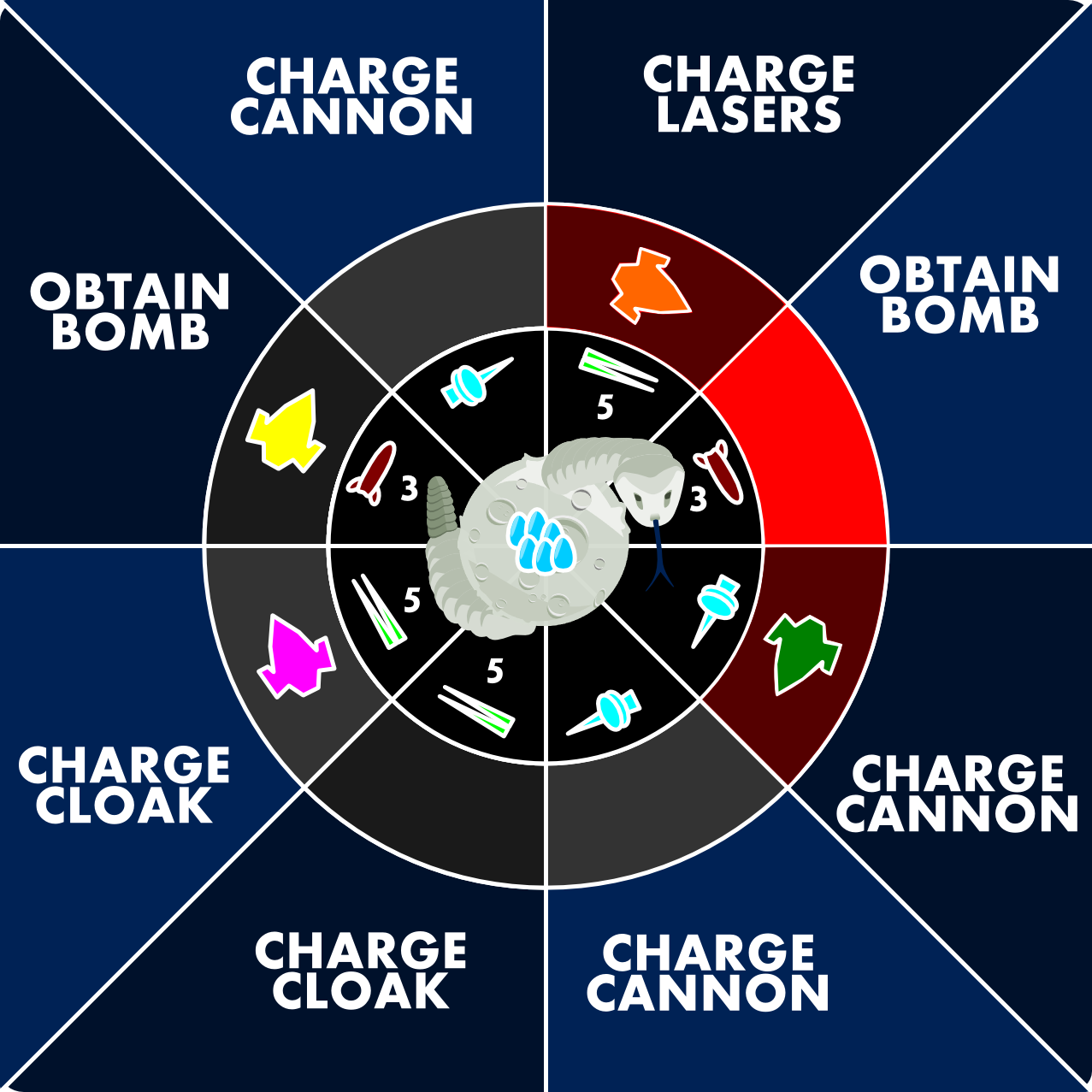
Moon Rattler Rondel Board
Let’s pretend we are the orange player. First of all, we are in a red region. The three red regions near the Moon Rattler’s head are the regions where the rattler can strike you. In the dark red regions you lose 1 AP if you are not cloaked. In the bright red region you lose 2 AP if you are not cloaked. Using the cloaking device does not cost AP, but the cubes must be discarded from your player mat.
So the orange player is in a region with CHARGE LASERS. The region also shows that only lasers can be used to attack in that region. So the orange player is basically deciding if the want to charge or attack with their lasers.
The green player is in the same situation in the image above with the exception that they are either charging their cannon or using their cannon to attack the eggs. They are also in a red region, so hopefully they had a cloaking cube to discard.
Here’s the other thing. Players may stay in a region as long as they like. Their ships will fly only when they use AP to move around the rondel. A player may use any number of AP to move 1 spot per AP around the rondel.
On a turn a player will use AP in any order. So let’s imagine we are the orange player again. We might have a bomb on board. So we could spend 1 AP to move into the bright red region at the head. Then we could use 1 AP to drop a bomb (and earn 5 points), then we could spend 2 AP to move off the head and onto the CHARGE CANNON region. That would be a great turn if we did not have any more cloaking cubes.
At the start of the game, an appropriate number of health cubes should be placed on the octants of the board. For example, the head region should begin with 3. Each time these regions are attacked, the attacking player will remove one of the cubes per attack. These regions can still be attacked but are only worth 1 point each. The game will end when all cubes have been removed.
My Thoughts: I think this could be an interesting concept. I like the balance of using AP to charge versus to attack. With the rondel in the game it makes it important where you are located. I think I may mock this one up and give it a try.
Your Designer Perspective:
What do you think about the design for Moon Rattler? What would you have come up with for the design based on the Boardgamizer criteria? Any thoughts about my design?
Thanks for reading! And don’t forget to exercise your brain by doing design exercises like this! Have a great weekend.
Monday Brews: 10-28-13
Happy Monday everyone! Well, Spiel at Essen is over and from what I’ve seen it looked pretty awesome. Some day I’ll make it over there. Some day. But since I didn’t attend I can’t provide you with an awesome recap about the convention. So it’s another typical Monday Brews article today.
However, I am adding a new section to the Monday Brews articles called The Designer’s Corner. This is a small area where I can discuss the design efforts I’ve made in the past week. Often there won’t be much in this section and I often work piecemeal on design. But it will at least give you a chance to see what I’ve been up to.
So without further adieu I present to you the Boards & Barley that I enjoyed last week…
The Barley:
Point Oktoberfest: Sadly this is likely my last Oktoberfest of the year. It’s been a good run as I had numerous varieties of Oktoberfests and even attended an Oktoberfest festival with three fellow game designers. Until next year, Oktoberfest!
Lake Louie Reserve Scotch Ale: I love Lake Louie’s Warped Speed scotch ale so I figured I’d try their reserve scotch ale that is only seasonally available. I wasn’t disappointed. This was stronger and more full of body than the Warped Speed and was highly enjoyable. Nicely done Lake Louie!
Homebrew Black Ale: I was also able to enjoy a fellow homebrewer’s Black Ale. It was delicious.
Tyranena Rocky’s Revenge: This is a bourbon barrel aged beer, but unlike last week’s episode with the Kentucky Ale, this one was actually enjoyable. The bourbon effect on this beer is pretty mild and doesn’t overwhelm the beer. The Rocky’s Revenge is a beer with a hint of bourbon, rather than the Kentucky which is more like bourbon with a hint of beer.
Newton’s Oatmeal Stout: This is my third homebrew and I was finally able to have one last night. And I was not disappointed. It had excellent character. It was mildly smooth and malty. It was not overly bitter. And coming in at 4.2% ABV I know I can enjoy a few without feeling the effects. I’m looking forward to more.
The Boards:
Settlers of Catan: I finally got to put my Catan Board to use. The verdict: it was nice. The reality: It’s not necessary. Sure, it keeps the board nicely in place. It lets you move the board if you need to. It helps prevent roads from being moved. But I wish I hadn’t spent $35 on it. Oh well. That’s partially due to the fact that I have an older version of the game and the ports in my version are still the hex tiles rather than the little chits that drop nicely into the Catan Board.
Keyflower: I was pretty excited to play Keyflower since it sounded like a game right up my alley. There is worker placement in the game, but it’s not used in the usual way. It’s more of a placement auction mechanic where players are placing workers as bids for buildings. Unfortunately we had a long gap in our play where we were having a discussion about awesome stuff. So when we got back to the game we had sort of lost track of where we were. I suppose that means I’ll just have to play it again 🙂
The Designer’s Corner:
I had a pretty good design week for two games: Quantum Orcas and Brooklyn Bridge.
QUANTUM ORCAS: On the QO front it was less about the game and more about the artwork and, potentially, how I might post it on The Game Crafter. I knew that the logo needed revising and so I sat down for a while and threw this together:
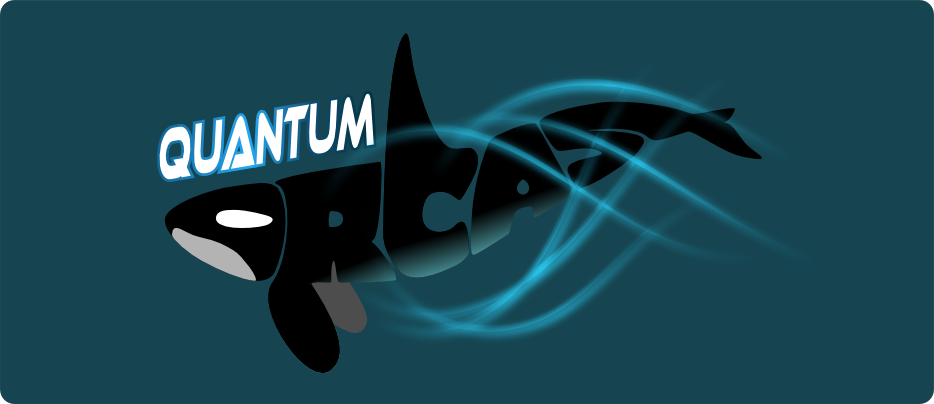
I might add a warp hole through which the orca is exiting.
I’m pretty happy with that, especially compared to the previous version, which can be seen in my Twitter photo roll. The game is coming along. There just seems to be something missing. When I have the breakthrough it requires I’ll be sure to let you all know.
BROOKLYN BRIDGE: I decided to change my approach slightly, to great results. I was pondering creating a quad-fold board for the playtesting. That would have been pointless. Instead I utilized some blank jumbo cards that I got from The Game Crafter at Protospiel-Milwaukee and turned each card into one round in the game. Each card then shows all of the worker placement locations available during that round. I think this will make playtesting much more accessible and I’m excited to get it to the table. I want to add another resource to the game so that I can make some interesting interaction between the goods and then it’ll be hitting the table!
***
So those are the Boards & Barley I enjoyed this past week, and the game design progress I made. What did you enjoy last week?
 Boards and Barley